What causes ice dams and how to stop them
Ice at the edge of your roof comes from warm air leaking into the attic. It melts the snow from underneath, and the water freezes again when it reaches the cold eaves, so the fix starts with sealing the attic.
ModelQuoter EditorialPublished Mar 25, 2026Reviewed September 2026
Applies to: US and Canada. Insulation levels are set by climate zone in both.
What a typical project costs
New shingle roof
18 squares, one layer off
$8,600–11,640
Installed, before tax, at 2026 Greater Toronto rates.
See it on my houseOpen the calculator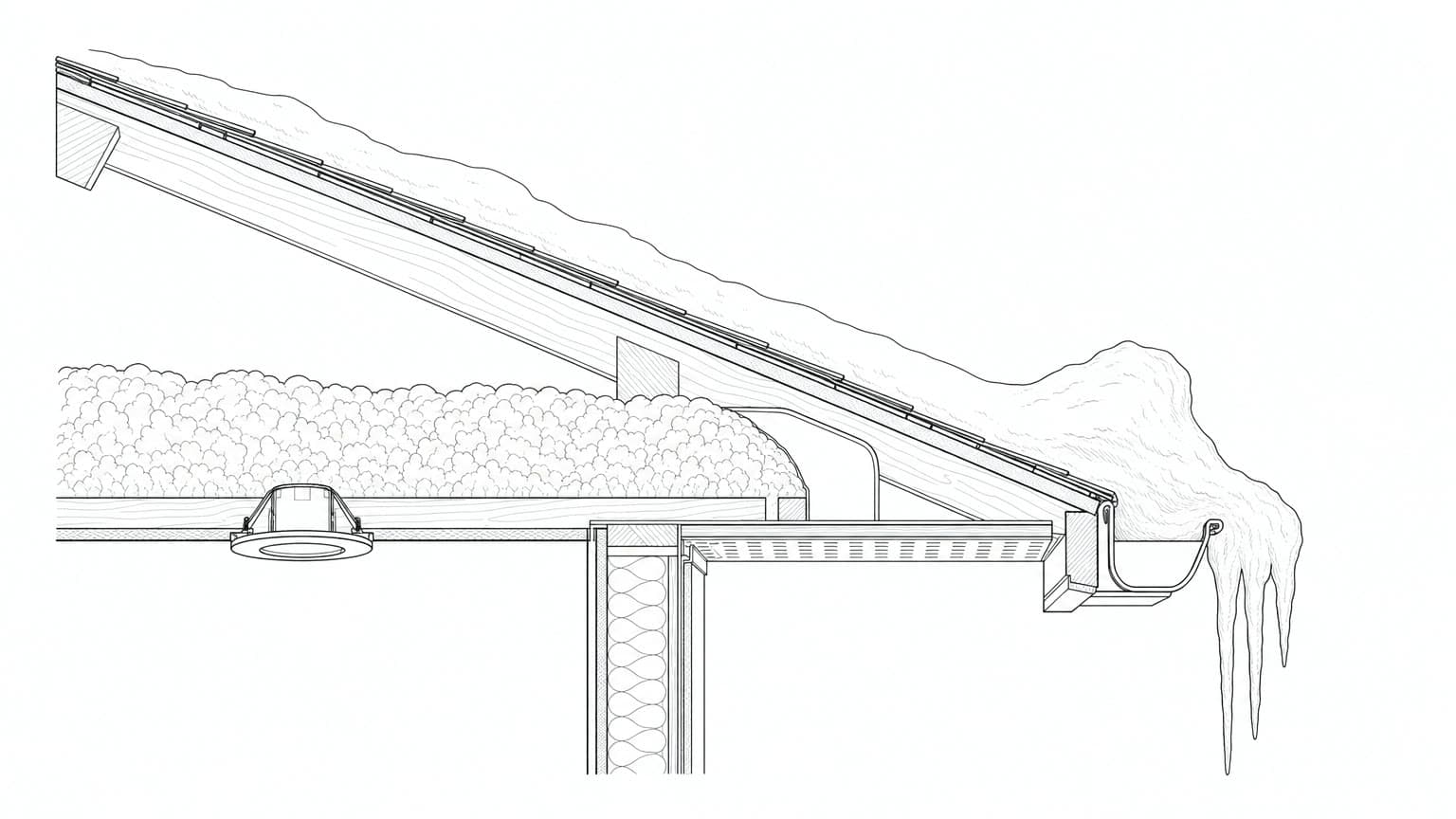
- Recessed lights and other ceiling openings leak warm air into the attic.
- Insulation keeps heat in, but only once the air leaks under it are sealed.
- A baffle holds the insulation back so outside air can flow along the underside of the roof.
- Soffit vents let cold outside air in at the eaves.
- The ice dam: snow melted by attic heat freezes again at the cold roof edge.
What you're seeing, and what it means
| What you see | Likely cause |
|---|---|
| Ice along the eaves, clear roof above it | Heat escaping into the attic; not enough air sealing and insulation |
| Frost on the underside of the roof boards | Moist indoor air leaking up, and not enough ventilation |
| One part of the roof clears first | A single leak below it, like a bathroom fan, a chase or a light fixture |
| Icicles, but no leaks inside yet | An early stage; the dam hasn't pushed water under the shingles yet |
| Damp insulation near the eaves | Blocked soffit vents, or condensation from air leaks |
If you have icicles and your neighbour doesn't, the difference is almost always how much heat is getting into your attic.
Why ice dams form
Snow on a roof melts from underneath when the roof boards are warm. The meltwater runs down until it reaches the eaves, which hang out past the house and stay at outdoor temperature, and it freezes again there. That ridge of ice grows through the winter and holds back the water behind it, which then works its way up under the shingles.
The ice is only the symptom. The cause is warm indoor air getting into the attic. That same heat is also costing you money on every day of the heating season.
The fix, in order
- 1.
Seal the air leaks
Insulation slows heat moving through it, but it does nothing to stop air moving through it, and moving air carries far more heat and moisture. Piling insulation on top of unsealed gaps is the most common way people spend money on ice dams without fixing them.
- 2.
Add insulation
Bring the attic up to the level your climate zone calls for, and pay attention to the edges, where it usually gets thin.
- 3.
Open up the ventilation
Clear or add soffit vents at the eaves and a vent at the ridge, so outside air washes the underside of the roof and keeps it cold. This only works once the first two steps are done.
Where attics leak air
- The attic hatch. Usually the biggest single leak, and usually not insulated. Weatherstrip it and insulate the lid.
- The tops of interior walls. There's a gap along the top of every wall below the attic.
- Plumbing stacks and wiring holes. Seal them with fire-rated foam or caulk suited to the surface.
- Pot lights. Older fixtures that aren't IC-rated act like chimneys. Replace them with airtight IC-rated ones instead of burying them in insulation.
- Bathroom and kitchen fan ducts. Seal them where they pass through the ceiling, and make sure they vent outside and not into the attic.
- Chimney chases and dropped ceilings. Big open cavities that often connect straight into the attic.
You can't see air leaks, and the biggest ones are often where nobody thinks to look, like a dropped ceiling over the kitchen or a chase behind the tub. A blower door test with an infrared camera finds them in an afternoon. Get one done before you pay for insulation.
How much insulation you need
The eaves are where most attics come up short. Where the roof meets the outside wall there's very little height, so the insulation gets thin right where ice dams form. New houses solve this with raised-heel trusses. In an older house, foam or cardboard baffles hold the air channel open so the insulation can be pushed out further without blocking the soffit vents.
Blocked soffit vents are very common, and insulation stuffed into them during an earlier upgrade is usually the reason. Check them while you're up there.
What won't fix it
Heat cables melt a channel through the ice and can stop damage in the short term, but they only treat the symptom. They run all winter and don't last forever. Raking snow off the roof after a storm helps, but it isn't a plan. Neither one does anything about the heat you're losing.
What about...
Can I just add more insulation?
It helps, but on its own it usually disappoints. Air leaks move more heat than insulation can stop, so insulation laid over unsealed gaps underperforms badly. Seal first, then insulate.
Should I add more roof vents?
Only after the attic is sealed. Adding vents to a leaky attic pulls more heated air out of the house, which raises your heating bill and can make frost worse. Ventilation keeps a sealed, insulated attic cold. It can't make up for one that isn't.
Do ice dams always mean a leak?
No. The dam forms before any water gets in. Icicles are the early warning, and fixing the cause at that stage costs far less than fixing a wet ceiling.
What about spray foam under the roof?
Spraying foam on the underside of the roof turns the attic into heated space and gets rid of the ventilation question. It costs a lot more, changes how the roof dries out, and has to be designed for your climate. It's a real option on a complicated roof, but not the default.
Replacing the roof at the same time? Price it with ice-and-water protection and proper ventilation in our free roofing calculator.
Open roofing calculator