Is triple-pane glass worth it?
Going from single to double pane makes a huge difference. Going from double to triple helps too, but much less, and in a mild climate the money usually does more elsewhere in the house.
ModelQuoter EditorialPublished Apr 8, 2026Reviewed September 2026
Applies to: US and Canada. Windows are rated by the NFRC in both countries, so the numbers on the label compare directly.
What a typical project costs
Six vinyl windows
Inserts, fully installed
$4,590–6,210
Installed, before tax, at 2026 Greater Toronto rates.
See it on my houseOpen the calculator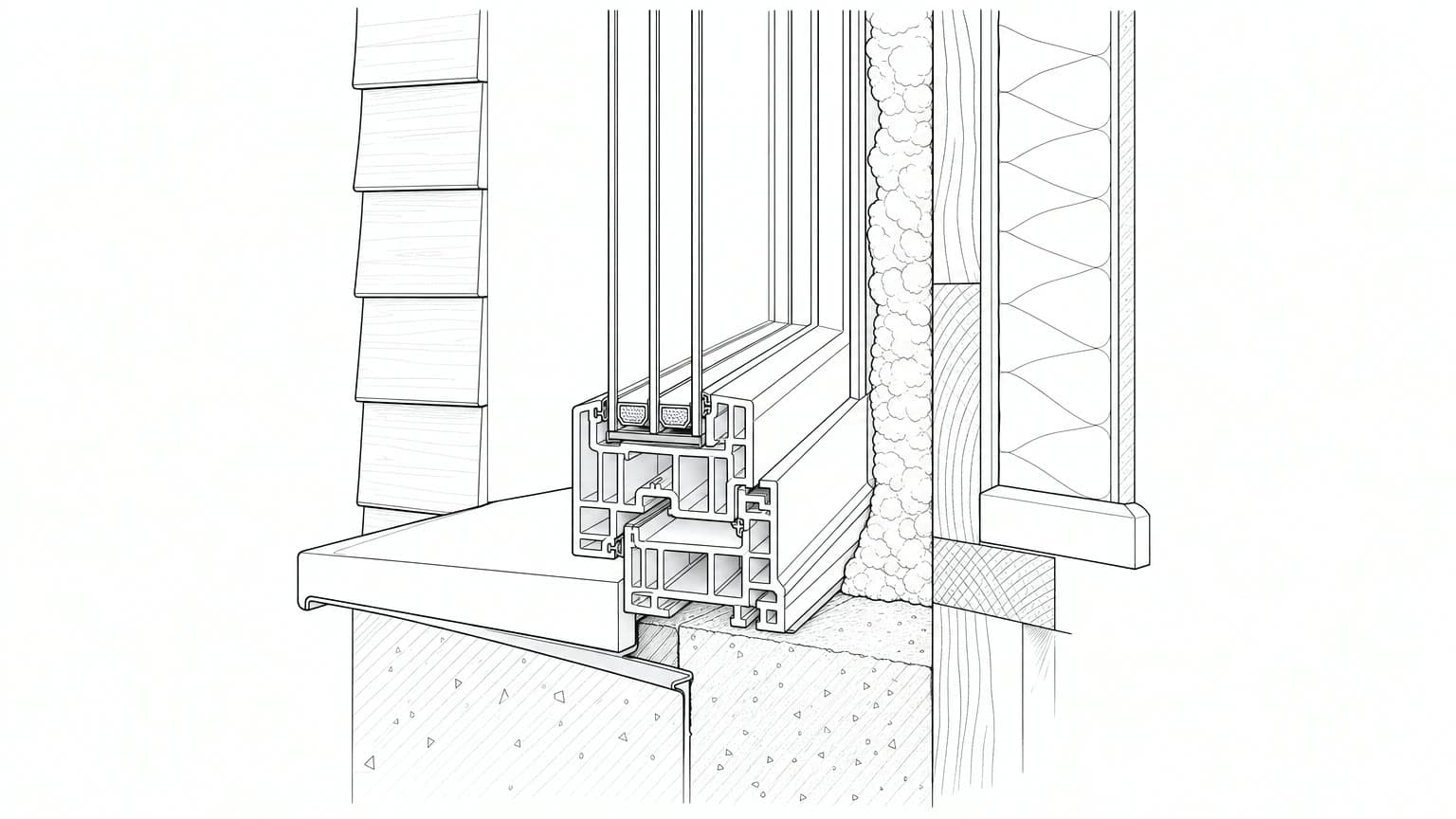
- Three panes of glass. Each extra pane adds another sealed, insulating gap.
- Spacer bars hold the panes apart and seal the gaps between them.
- Hollow chambers in the frame slow heat through the frame itself.
- Foam fills the gap to the wall. The installation matters as much as the glass.
- A sill sloped outward, with flashing under it, sends water away from the wall.
Is it worth it for you?
If you live somewhere with a long, cold winter, a noisy street, or a house that's already well insulated, triple-pane is often worth it. If you live somewhere mild, a good low-E double-pane window is usually enough, and the extra money will do more for comfort if you spend it on air sealing and attic insulation.
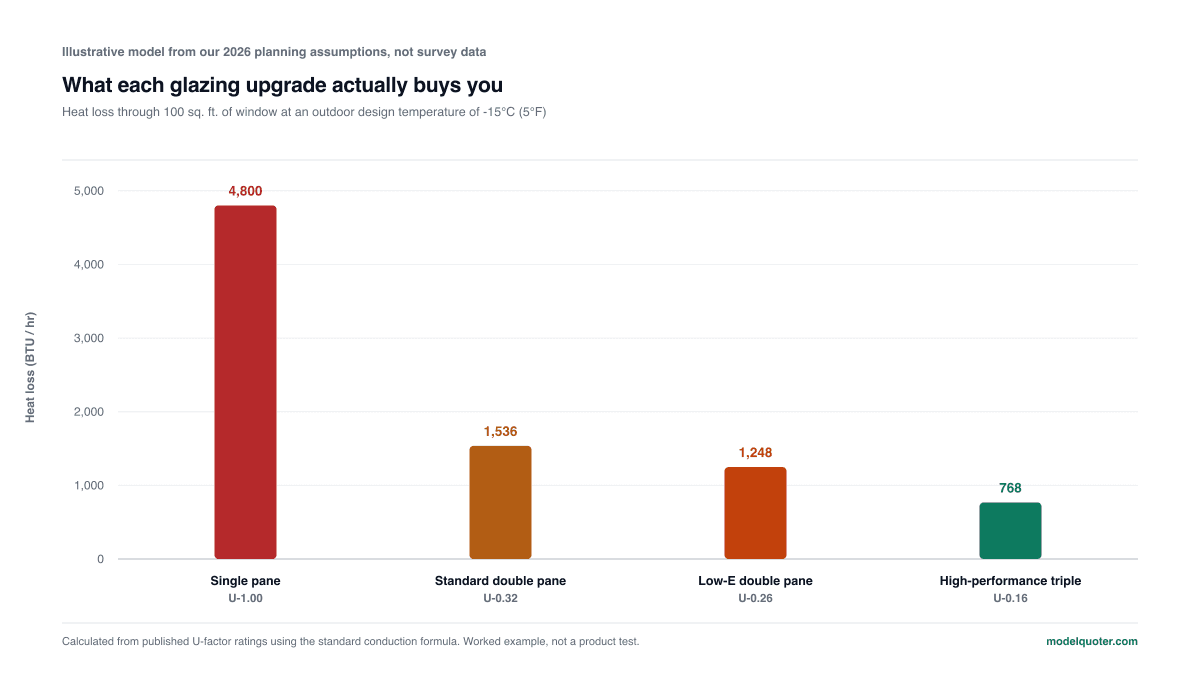
The reason is how the gains stack up. Going from single to double glazing cuts about two thirds of the heat lost through the glass. Going from a good double-pane window to triple-pane saves a few hundred more BTU per hour. That's a real saving, but it's small next to the first step, and triple-pane windows cost more and weigh more. Don't expect new windows to pay for themselves in energy savings alone. Buy them for comfort, quiet, less condensation and how they work and look, and count the energy savings as a bonus.
Reading the label
| Rating | What it measures | What you want |
|---|---|---|
| U-factor | How easily heat passes through the whole window, frame included | Lower is better. Old single glazing is around 1.0; a high-performance triple unit is about 0.15 |
| SHGC (solar heat gain coefficient) | How much of the sun's heat gets through | Higher on south-facing windows in a cold climate; lower where summer heat is the problem |
| Spacer type | What separates the panes at the edge | A warm-edge spacer, which cuts condensation at the edge of the glass |
Set the SHGC by which way each window faces. You don't need the same glass on every side of the house, and plenty of people put triple-pane on the coldest and noisiest sides and good double-pane everywhere else. Argon gas between the panes is cheap and standard on good windows. It does leak out, but very slowly, over decades.
Where triple-pane pays off
- Cold climates with long heating seasons. The colder and longer the winter, the more hours the extra pane is working.
- Comfort next to the glass. The inside pane stays warmer, so there's less chill and less cold air falling off the window. That changes how usable the space beside it feels.
- Noise. Triple-pane units with panes of different thicknesses cut outside noise noticeably. On a busy road, that alone can justify the cost.
- Condensation. A warmer inside pane is less likely to fog up in a humid room like a kitchen or bathroom.
- A new, well-insulated house. Once the walls are well insulated, the windows are the weak point, and it makes sense to close the gap.
If the attic is under-insulated or the house leaks a lot of air, fix that first. Sealing and insulation almost always return more comfort per dollar than upgrading double-pane to triple. Windows are satisfying to replace because you can see them, but they're rarely the biggest hole in the house.
Frames and installation matter as much as the glass
The U-factor covers the whole window, frame included. Great glass in a poorly designed frame loses much of its advantage at the edges, and that's also where condensation shows up first.
| Frame | Strengths | Drawbacks |
|---|---|---|
| Vinyl (uPVC) | Good insulation, low maintenance, lower cost | Limited colours; expands and contracts noticeably |
| Fibreglass | Very stable, strong, insulates very well | More expensive; fewer suppliers |
| Wood-clad | Warm wood inside, durable outside | Highest cost; the inside needs upkeep |
| Aluminum | Slim frames, strong | Loses heat unless it has a proper thermal break |
Insert or full-frame replacement
There are two different ways to replace a window, and quotes don't always say which one they're pricing. The difference between them is bigger than the difference between double and triple glass.
| Method | What happens | Trade-off |
|---|---|---|
| Insert (pocket) replacement | The new window fits inside the old frame, which stays | Faster and cheaper, but you lose some glass area and any hidden rot stays behind |
| Full-frame replacement | Everything comes out down to the rough opening | Keeps the glass area and lets the opening be flashed and insulated properly; costs more and disturbs trim inside and out |
An insert is fine when the old frame is solid and square. Go full-frame if there's any sign of water damage, if the original frames are failing, or if you want the opening sealed and flashed to today's standards. Most of the performance gain comes from that sealing and flashing.
- Ask what happens to the interior trim and who finishes it. It's a common gap between the window quote and the finished job.
- Check whether the warranty transfers to a buyer if you might sell, and what it requires of the installer.
- Check the hardware on big triple-pane casements. The extra weight can make very large opening windows awkward to operate.
Price a window replacement by frame type, glass and number of openings in our free calculator.
Open window calculator