Asphalt shingles vs. metal roofing: which costs less over time?
Architectural shingles cost about half as much as standing-seam metal to install, but you'll likely replace them once or twice in the life of a metal roof. Which is cheaper depends mostly on how long you plan to stay.
ModelQuoter EditorialPublished May 20, 2026Reviewed September 2026
Applies to: US and Canada. Underlayment and ice barrier requirements vary by climate zone and are noted where they matter.
What a typical project costs
New shingle roof
18 squares, one layer off
$8,600–11,640
Installed, before tax, at 2026 Greater Toronto rates.
See it on my houseOpen the calculator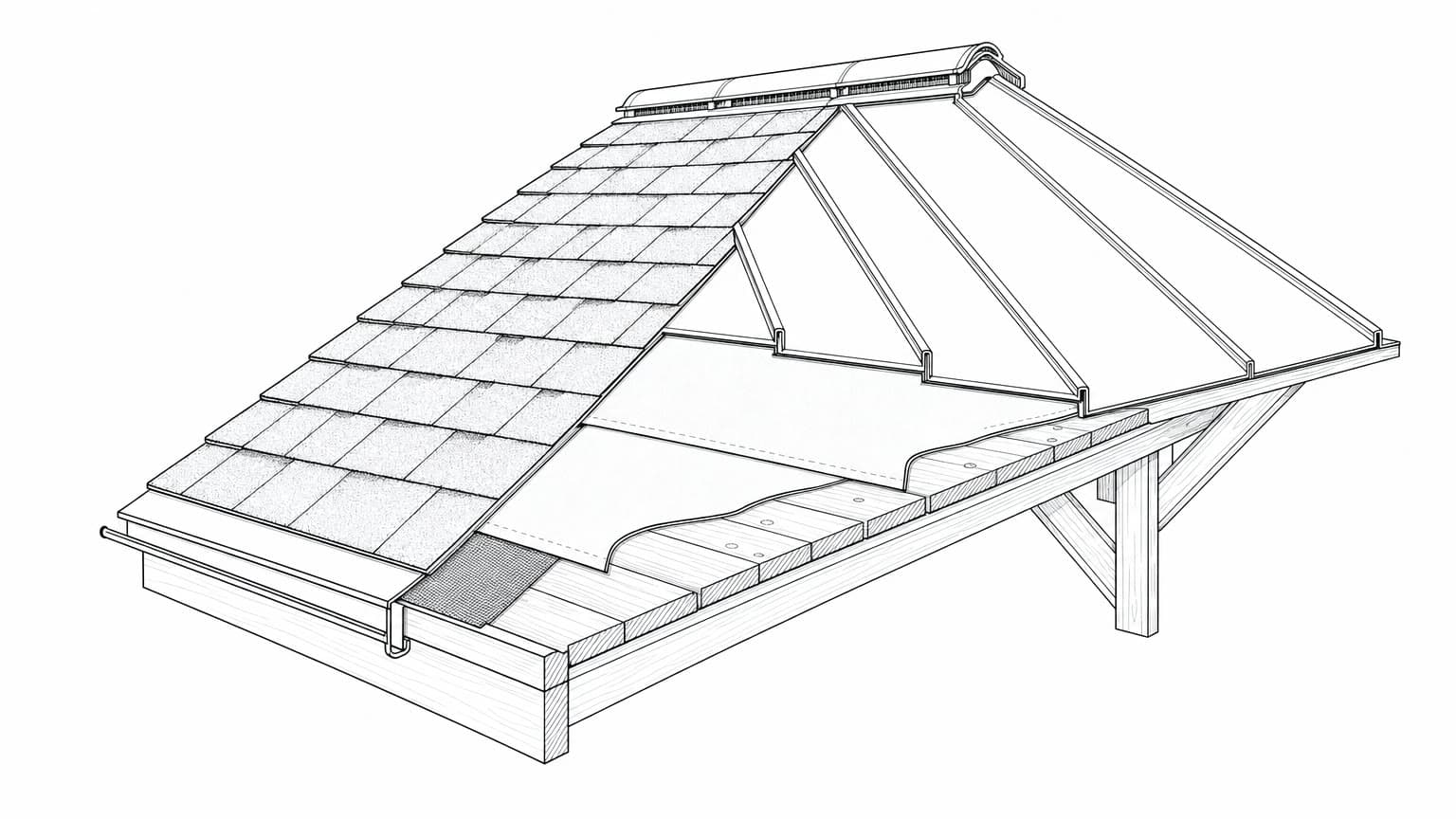
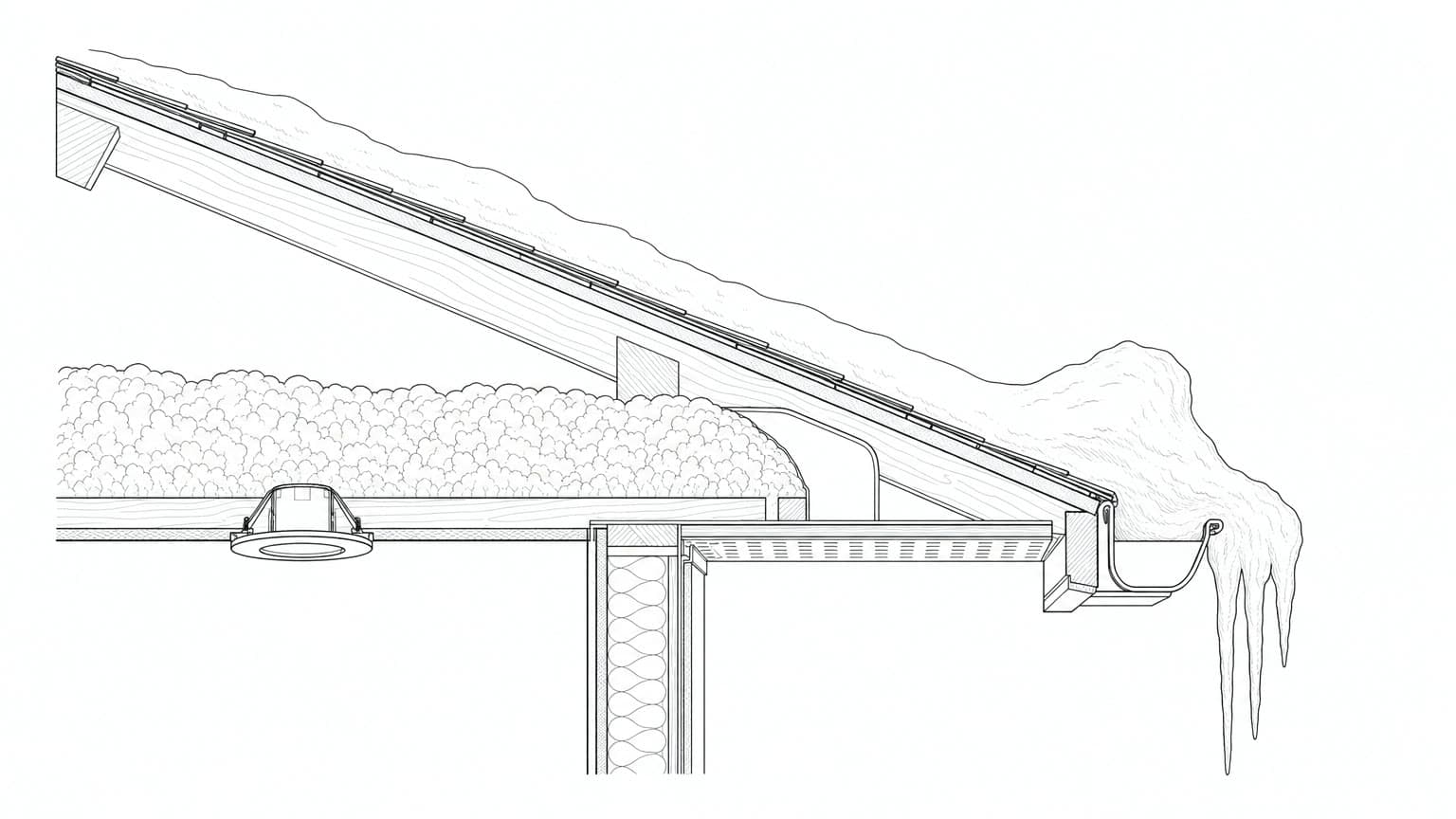
- A self-sealing membrane along the eave, where ice dams push water up under the roofing.
- Underlayment over the whole deck, under either kind of roof.
- A drip edge carries water off the roof edge into the gutter.
- Architectural asphalt shingles: about half the installed cost of metal.
- Standing-seam metal. The raised seams are where the panels lock together.
- A ridge vent lets attic air out along the peak.
Pricing a 20-square roof
Roofs are priced by the square, which is 100 square feet of roof surface. That's roof area, not floor area, so a steep roof has a lot more squares than the size of the house suggests.
Take a house with 20 squares of roof. At our 2026 Toronto rates of $450–850 CAD a square, architectural shingles come to roughly $9,000–17,000. Standing-seam metal costs about double, so call it $18,000–34,000 for the same roof.
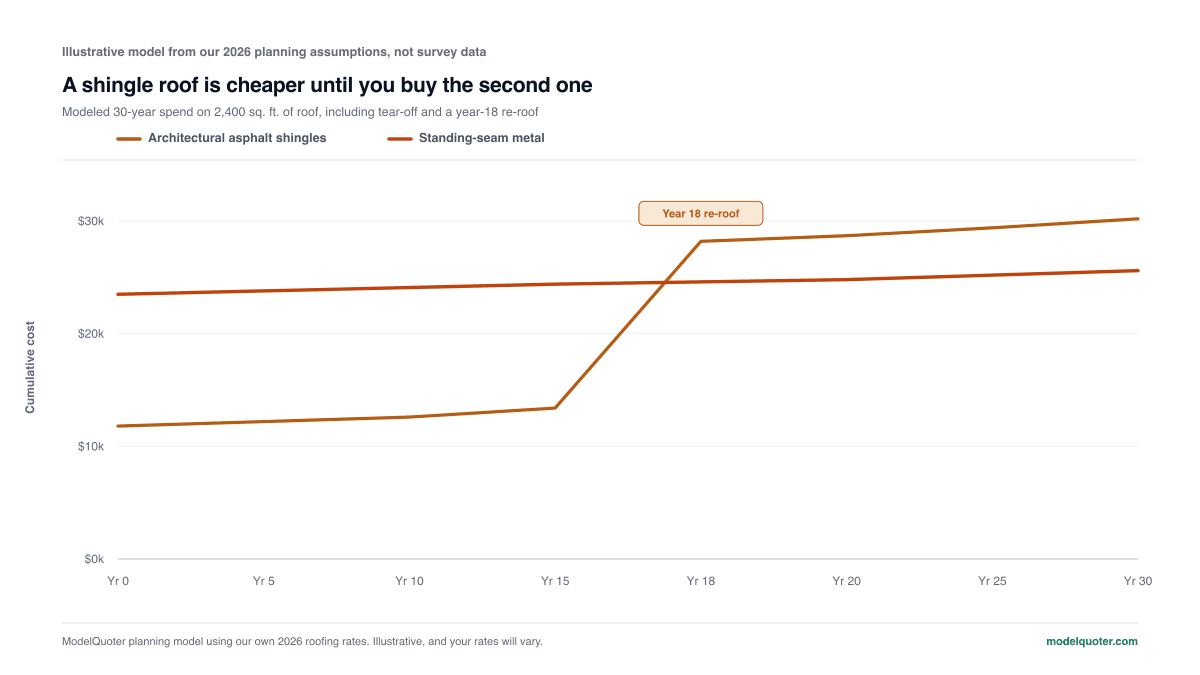
Shingles last roughly 18–25 years. Metal lasts 40–60 years or more. If you stay 30 years, you'll probably pay for shingles twice. Two shingle roofs at today's prices cost about the same as one metal roof, and inflation will make the second shingle roof cost more than the first. If you plan to sell within ten years, shingles are the better buy, and the next owner pays for the replacement.
What else drives the price
| Factor | Effect |
|---|---|
| Old layers to tear off | Each layer removed adds labour and disposal |
| Pitch | Steep roofs need staging and slow the crew down a lot |
| Access and height | Three storeys, tight lots and awkward drops all add cost |
| Vents, stacks, skylights, chimneys | Each one needs flashing work |
| Valleys and hips | A cut-up roof costs more per square than a simple gable |
| Condition of the roof boards | Rotten sheathing is found after tear-off and priced then |
| Ice barrier | Required at the eaves in cold climates, sometimes well up the slope |
What the quote should include
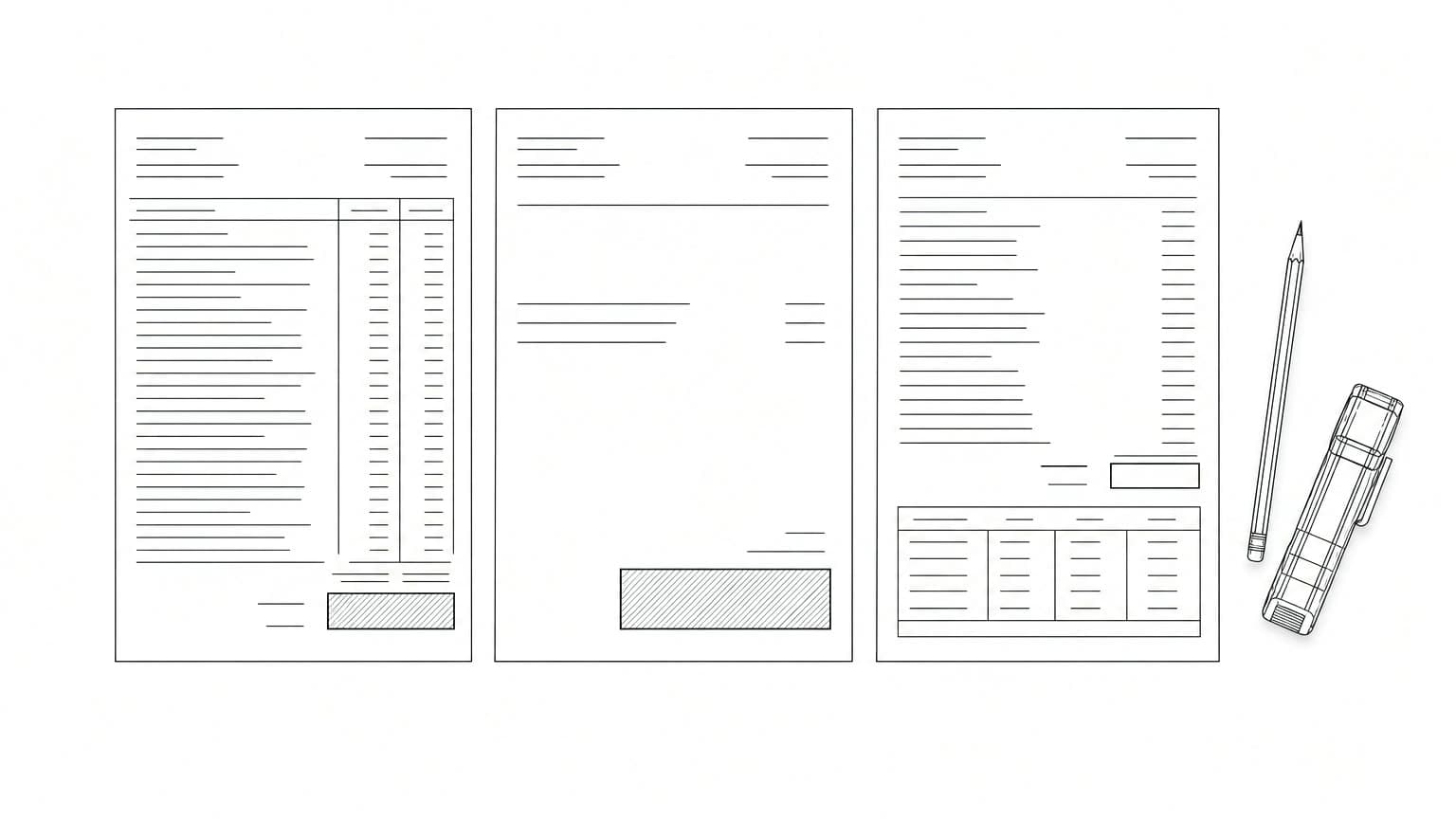
- Tear-off down to the roof boards, with the number of layers and disposal included.
- An inspection of the roof boards and a per-sheet rate for replacing bad ones.
- The type of underlayment, plus ice-and-water membrane at the eaves, valleys and around penetrations, as far up as your climate requires.
- Drip edge at the eaves and gable ends. It's often left out, and it's what stops water wicking behind the fascia.
- New flashing, not reused. Chimney, sidewall, step and kick-out flashing should all be listed.
- Ventilation. A ridge vent, and confirmation that the soffit vents are clear.
- Warranty terms, with the manufacturer's material warranty listed separately from the contractor's workmanship warranty.
How to tell your roof is near the end
Roofs rarely fail all at once. They give you several years of warning, and if you read the signs early you can replace it on your schedule instead of in the middle of a storm.
- Granules in the gutters. Asphalt shingles shed their gritty surface as they age. A steady buildup means the layer underneath is getting exposed.
- Curling or cupped edges, especially on the slopes that get the most sun.
- Cracked or missing tabs after ordinary weather, even without a big storm.
- Daylight in the attic, or stains on the underside of the roof boards.
- Sagging between the rafters, which suggests the roof boards themselves are breaking down.
- Age. Once architectural shingles get close to 20 years, plan the replacement instead of waiting for a leak.
Get quotes while nothing is leaking. With water coming through the ceiling, most people hire the first crew available at the first price they hear. Quoting a roof that's near the end of its life, in a slow season, saves real money and gets you a better conversation about details like flashing and ventilation.
Other roofing materials
| Material | Rough lifespan | Good for |
|---|---|---|
| 3-tab asphalt | 15–20 years | Budget replacements, rentals, short stays |
| Architectural asphalt | 18–25 years | Most houses |
| Standing-seam metal | 40–60+ years | Staying long term, shedding snow, adding solar later |
| Metal shingles or tile-look metal | 40–50 years | Metal's lifespan where standing seam looks wrong |
| Cedar shakes | 20–30 years | Looks, where fire rules allow them |
| Synthetic slate or shake | 40–50 years | The look of slate without the weight |
| Natural slate or clay tile | 75+ years | Heritage houses; the structure has to be checked for the weight |
Don't forget the ventilation
The roofing is only half of a roof. The other half is the air moving under the roof boards. A new roof over blocked or unbalanced ventilation ages faster than the warranty assumes, and sometimes fast enough to void it.
- Intake and exhaust have to balance. A ridge vent with blocked soffits pulls heated air out of the house instead of drawing outside air along the underside of the roof.
- Don't mix exhaust types. A ridge vent plus gable vents or a powered fan lets air come in one exhaust and leave by another without ever passing along the roof boards.
- Check the soffits from inside the attic. Insulation stuffed into them during an old upgrade is very common, and you can't see it from the ground.
- Every bathroom and kitchen fan has to vent outside, not into the attic, and not into a soffit where the air comes right back in.
Re-roofing is also the cheapest time to fix ventilation. Baffles, extra soffit vents and a properly sized ridge vent cost very little while the roof is open, and a lot more afterwards.
Common questions
Can I put new shingles over the old ones?
Codes usually allow a limited number of layers, but it's usually a false saving. Nobody can inspect the roof boards, the new roof runs hotter and wears out sooner, the flashing suffers, and the eventual tear-off costs more. Tear it off.
Is a metal roof noisy in the rain?
Not when it's installed over solid roof boards with underlayment, which is how houses are done. The noisy metal roofs people remember are on barns, over open framing.
How long does a roof replacement take?
One to three days for shingles on a simple house. Metal takes longer because the panels are made to length and go on more slowly. The weather decides the schedule more than the crew size does.
What if I want solar panels later?
Decide before you re-roof. Putting solar on a roof with ten years left means taking it off and putting it back when you replace the roof. Standing-seam metal is the easiest roof for solar, because the clamps attach to the seams without making holes.
Price a new roof by footprint, pitch and material in our free roofing calculator.
Open roofing calculator