How to compare contractor bids
Three bids for the same job can come in thousands of dollars apart, usually because each contractor priced a slightly different job. Get everyone quoting the same written scope first, and the numbers become worth comparing.
ModelQuoter EditorialPublished Jan 14, 2026Reviewed September 2026
Applies to: US and Canada. Deposit caps and written-contract rules differ by state and province. The ones that matter here are noted in the guide.
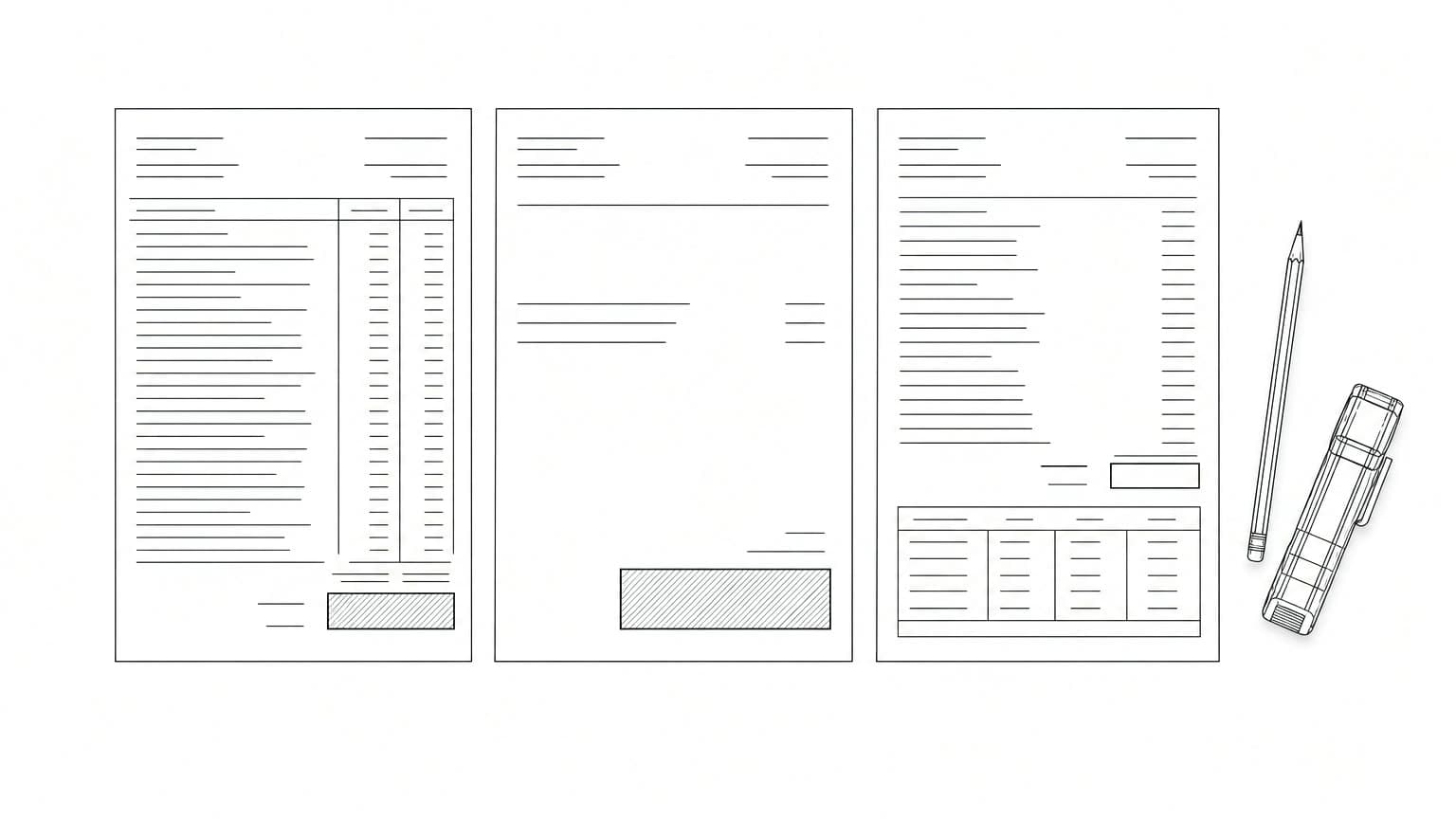
- An itemized quote: every part of the job on its own line, with quantities. The easiest kind to compare.
- A lump sum: one number and a few lines. You can’t tell what it includes or leaves out.
- A payment schedule: what you pay at each stage, tied to work that’s finished.
- Check each quote against the same written scope before you compare totals.
Why the numbers are so far apart
When three bids for the same job land thousands of dollars apart, the usual reason is that each contractor priced a slightly different job. Your description left gaps, and each of them filled those gaps their own way. One assumed they'd tear out the old deck and haul it away. Another planned to build over it. One priced a new structural post, and another never looked underneath.
Get three bids. Five wastes everyone's time, including yours. On the same scope, bids usually land within 10–20% of each other, and a gap of more than 30% is worth looking into before you go any further.
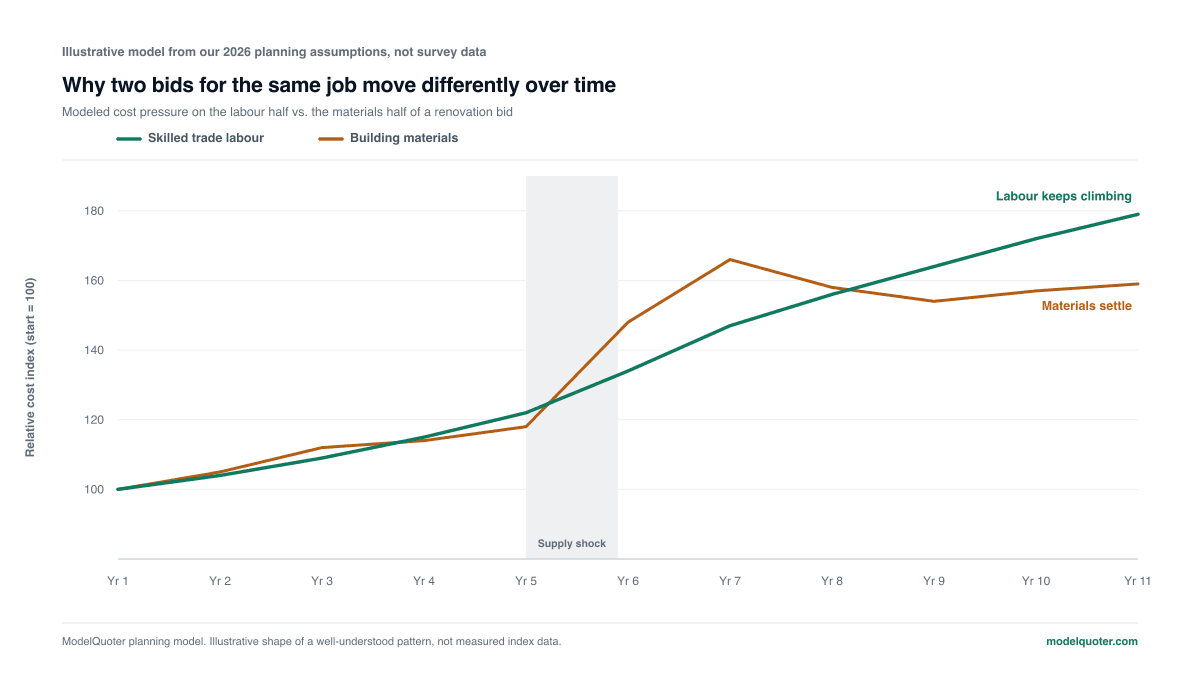
Materials and labour also move separately. Material prices follow national supply chains, and you can check them in an afternoon. Labour is local. It carries the contractor's overhead, the size of the crew, and how much risk they see in the job. Two bids can list almost the same materials and still be far apart on labour.
1. Give every contractor the same scope
You can't compare totals when each bid describes different work. Write the scope down before you ask for bids, send the same scope and photos to everyone, and make sure each bid answers these questions.
- Removal and disposal. Is it included? Bin rental and dump fees add up.
- Materials. "Tile" isn't a specification. "12x24 glazed porcelain, epoxy grout, Schluter edge trim" is.
- Site protection and cleanup. Floor protection, dust barriers and a final clean.
- Permits. What they cost and who applies for them.
- The usual omissions. Railings, gates, underlayment and paint touch-ups often get left out.
- Access. A backyard you can only reach through the house costs more to build in.
| Line item | Too vague to price | Specific enough to compare |
|---|---|---|
| Demolition | Remove existing materials | Tear out to subfloor, one 15-yard bin, subfloor inspected before rebuild |
| Electrical | Add pot lights | Six 4" LED slims, one dimmed circuit, existing panel, no service upgrade |
| Tile | Client supplies tile | Owner supplies field tile; contractor supplies setting materials, grout, trim, waterproofing |
| Cabinets | Install new kitchen | Frameless boxes, soft-close, 34 lf uppers and lowers, delivered and installed, no counters |
2. Check each price against known rates
Once the scopes match, compare each number to a known range. These are installed prices from our 2026 Greater Toronto rate tables, covering materials, labour and standard prep. They're estimates, not quotes, but if a bid is far outside one, ask the contractor why.
| Work | Installed range | Unit |
|---|---|---|
| Pressure-treated fence, 6 ft | $45–70 | per linear foot |
| Cedar fence, 6 ft | $55–85 | per linear foot |
| Pressure-treated deck | $30–50 | per square foot |
| Capped composite deck | $65–90 | per square foot |
| Interlock paver patio | $17–35 | per square foot |
| Asphalt driveway | $5–12 | per square foot |
| Concrete driveway | $12–20 | per square foot |
| Architectural asphalt roof | $450–850 | per square (100 sq ft) |
| Engineered wood flooring | $8–15 | per square foot |
All figures are in Canadian dollars, before tax, for the Greater Toronto Area. Prices move with the market, site access and the season, and a difficult site can fairly price above the range. Use the table to catch a bid that's way off. Don't use it to push a contractor down to the bottom of a range.
3. Read the payment schedule
How a contractor wants to be paid tells you a lot about how they run their business. A good schedule ties each payment to finished work you can inspect. A big payment before any work starts is a warning sign, because it can mean your money is paying for someone else's job.
- A deposit of 10–20%, or your local cap if that's lower.
- Progress payments tied to finished milestones, like "rough-in passed inspection," instead of calendar dates.
- A 10% holdback, paid once the deficiency list is done and not the day the crew packs up.
- Payments made to the company, never to an individual, and never in cash without a receipt.
4. Ask these questions before you sign
- 1.
What part of this job worries you?
A contractor who has looked closely at your job will name something: what might be behind a wall, a drainage problem, a long lead time on materials. If they tell you it's all straightforward, they either haven't looked or they're telling you what you want to hear.
- 2.
Who will be on site every day?
Ask whether it's their own crew or subcontractors, and whether a lead hand will be there daily. Get that person's name and number before you sign.
- 3.
Can I call your insurance broker?
Ask for the broker's phone number instead of a PDF the contractor forwards you. One call confirms the policy is active and covers this kind of work.
- 4.
How will you price changes?
Agree in writing now on the markup for extra labour and materials, while there's nothing to argue about.
- 5.
What happens if you find something unexpected?
Work should stop, and you should get a written price before it starts again. You shouldn't learn about extra work from the final invoice.
Common questions
Is the lowest bid always a bad sign?
No. The contractor might have a gap in their schedule, already be working on your street, or run a leaner shop. It becomes a warning sign when you can't explain the difference from the paperwork, because that usually means work is missing from the bid.
Should I tell contractors what the other bids came in at?
Share the scope and keep the numbers to yourself. If you name a competitor's price, you'll often get a matching total with less work in it. Ask each contractor to explain how their approach differs.
What if one bid is much higher than the others?
Read it before you throw it out. A high bid sometimes includes work the others missed, like a structural repair, an electrical service upgrade or proper waterproofing.
Do I need a written contract for a small job?
In some places the law requires one. California requires a written contract above $500, and Ontario requires one for direct agreements over $50. Below those amounts, a one-page scope with a price and a start date still protects both of you.
Model your project before you ask for bids. You'll get an instant estimate to check every bid against.
Model a project