Bathroom remodeling: waterproofing, layout and cost
In a shower, the waterproof membrane behind the tile keeps water out of your walls and floor. It's the part of a bathroom quote you most need spelled out in writing.
ModelQuoter EditorialPublished Mar 18, 2026Reviewed September 2026
Applies to: US and Canada. Waterproofing follows TCNA and ANSI standards in both. Plumbing and ventilation codes are noted where they differ.
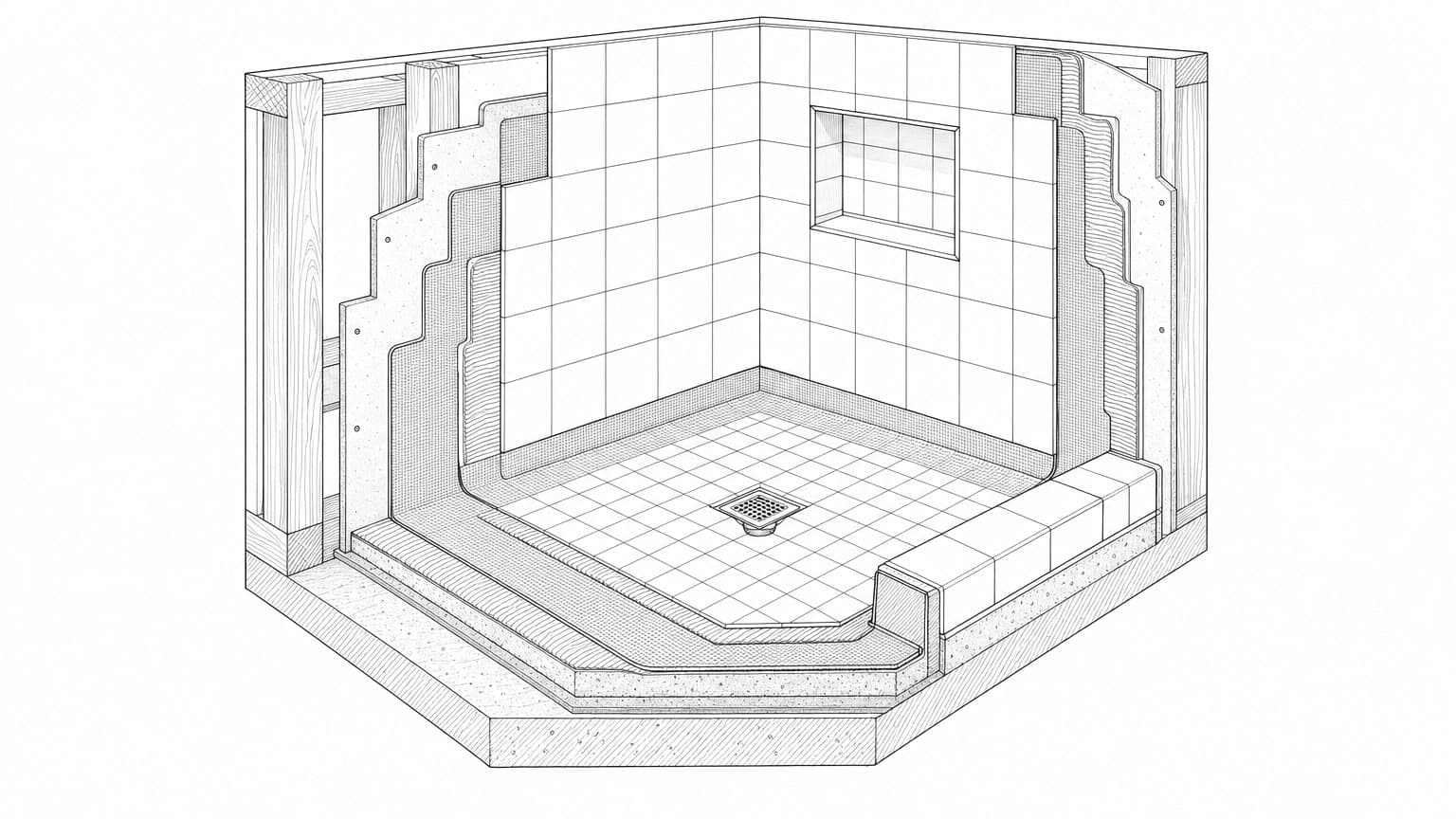
- The waterproof membrane, behind the tile and its mortar. Tile and grout aren’t waterproof on their own.
- Inside corners, where the membrane has to lap and seal. Most shower leaks start at a corner or a seam.
- The drain, with the membrane bonded into its flange.
- The curb, wrapped in membrane on every side.
- A niche: more corners to waterproof.
Tile isn't waterproof
Water gets through grout. It always has. Grout fills the joints between tiles, but it doesn't seal them, and a shower that relies on it will eventually soak the framing behind it. The waterproofing is a separate layer that goes on before any tile, and it's the thing in a bathroom quote you most need to have described in detail.
Where showers leak
- Corners and seams. Walls and floors move a little, and a membrane that isn't reinforced at the joints will split there first.
- The curb. It has three exposed sides and gets stepped on every day, so it needs to be wrapped on the top and both sides.
- Anything that goes through the membrane. The valve, the shower arm, a niche, a bench and the drain each need their own sealed detail.
- The slope under the membrane. The surface under the membrane has to fall toward the drain, usually a quarter inch per foot, so water that reaches it can drain away. If the slope is only built into the tile, water gets trapped underneath.
- The edge of the shower. Where the wet floor meets the rest of the room is another joint, and joints leak.
Shower leaks are slow and quiet. By the time a stain shows up on the ceiling below, water has usually been in the floor for months. Pay for the waterproofing properly once instead of saving a little and rebuilding in six years.
Questions to ask the installer
- 1.
Which membrane will you use?
You want a product name and a method, not "we waterproof it." An installer who can name both has done this before.
- 2.
How will you build the slope to the drain?
A mortar bed or a pre-formed pan, and where the low point is. This question tells a tile setter apart from someone who builds showers.
- 3.
Is any drain moving?
Confirm this before pricing. It's the difference between finish work and opening up the floor.
- 4.
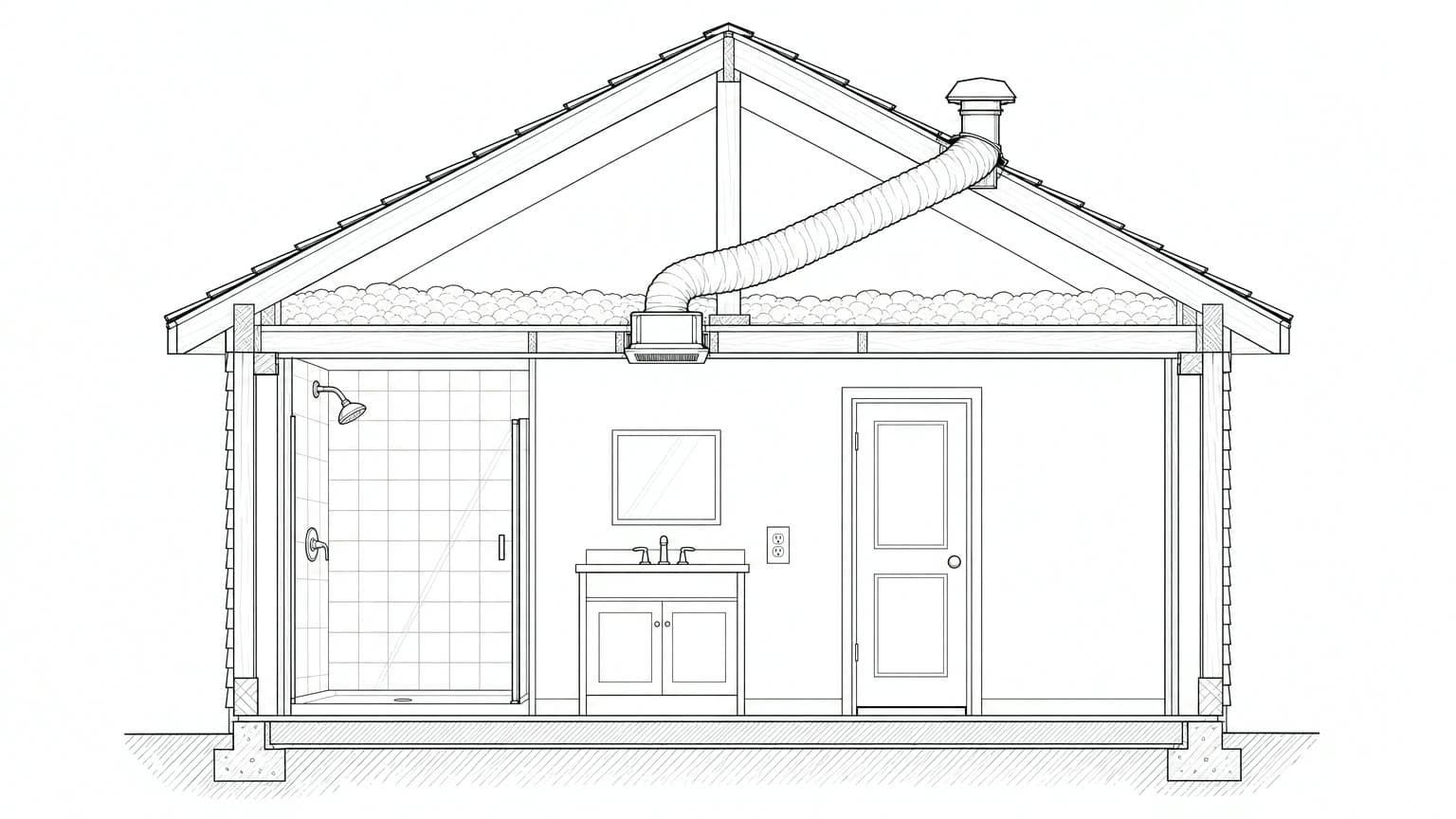
What size fan, and where does it vent?
It should be sized for the room and ducted outside. It should never vent into the attic or the soffit.
- 5.
Will you flood-test the pan before tiling?
A flood test holds water in the shower pan for 24 hours before any tile goes down. It's cheap and quick, and it's the only chance to find a leak while it's still easy to fix.
The clearances that decide your layout
Most bathrooms are small, and every fixture needs a certain amount of space around it. Those clearances usually decide whether a layout works, more than your taste does.
| Clearance | Minimum | Comfortable |
|---|---|---|
| Toilet centre to wall | 15" | 18" |
| Space in front of toilet | 21" | 24–30" |
| Shower interior | 30" × 30" | 36" × 42" |
| Vanity to opposite wall | 21" | 30" |
| Door swing | Can't hit a fixture | Consider an outswing or pocket door |
In a tight room, the cheapest ways to gain space usually aren't structural. A pocket door or an outswing door gets back the whole swing. A wall-hung vanity and toilet leave the floor open and make cleaning easier. A glass screen instead of a curtain keeps the room feeling bigger. None of these moves a drain, so they stay affordable.
What drives the cost
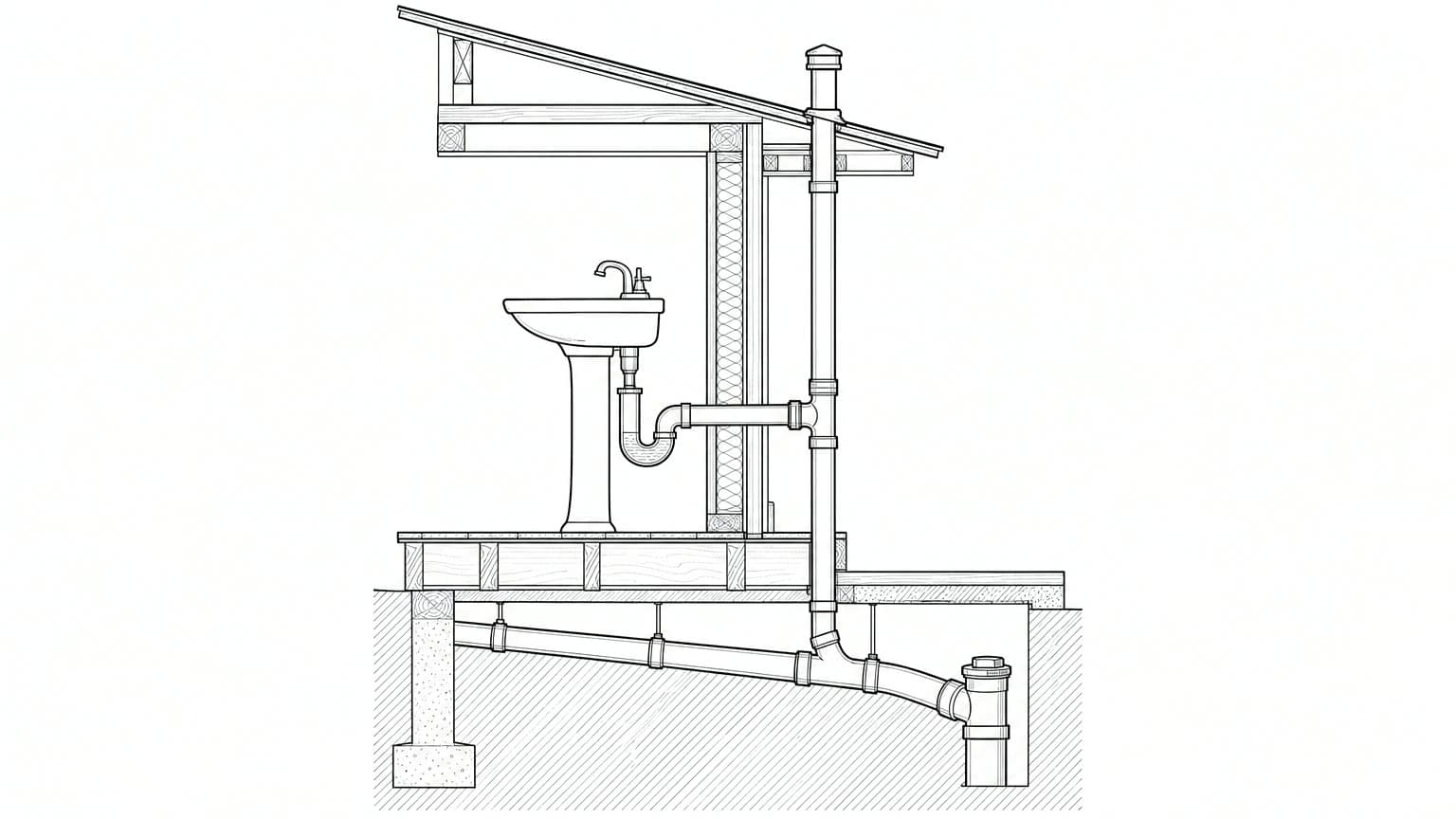
The biggest single decision is whether any drains move. Replacing fixtures in their current spots is finish work. Moving the toilet drain means opening the floor, re-cutting the slope and re-venting, and in a condo or on a slab it can be off the table entirely.
| Item | Standard renovation | Premium ensuite |
|---|---|---|
| Shower | Acrylic base with tiled walls | Curbless tiled floor, linear drain, niche and bench |
| Waterproofing | Membrane up to above the shower head | Full wet-room membrane and vapour control |
| Vanity and counter | Ready-made single vanity, quartz top | Custom double floating vanity, slab counter |
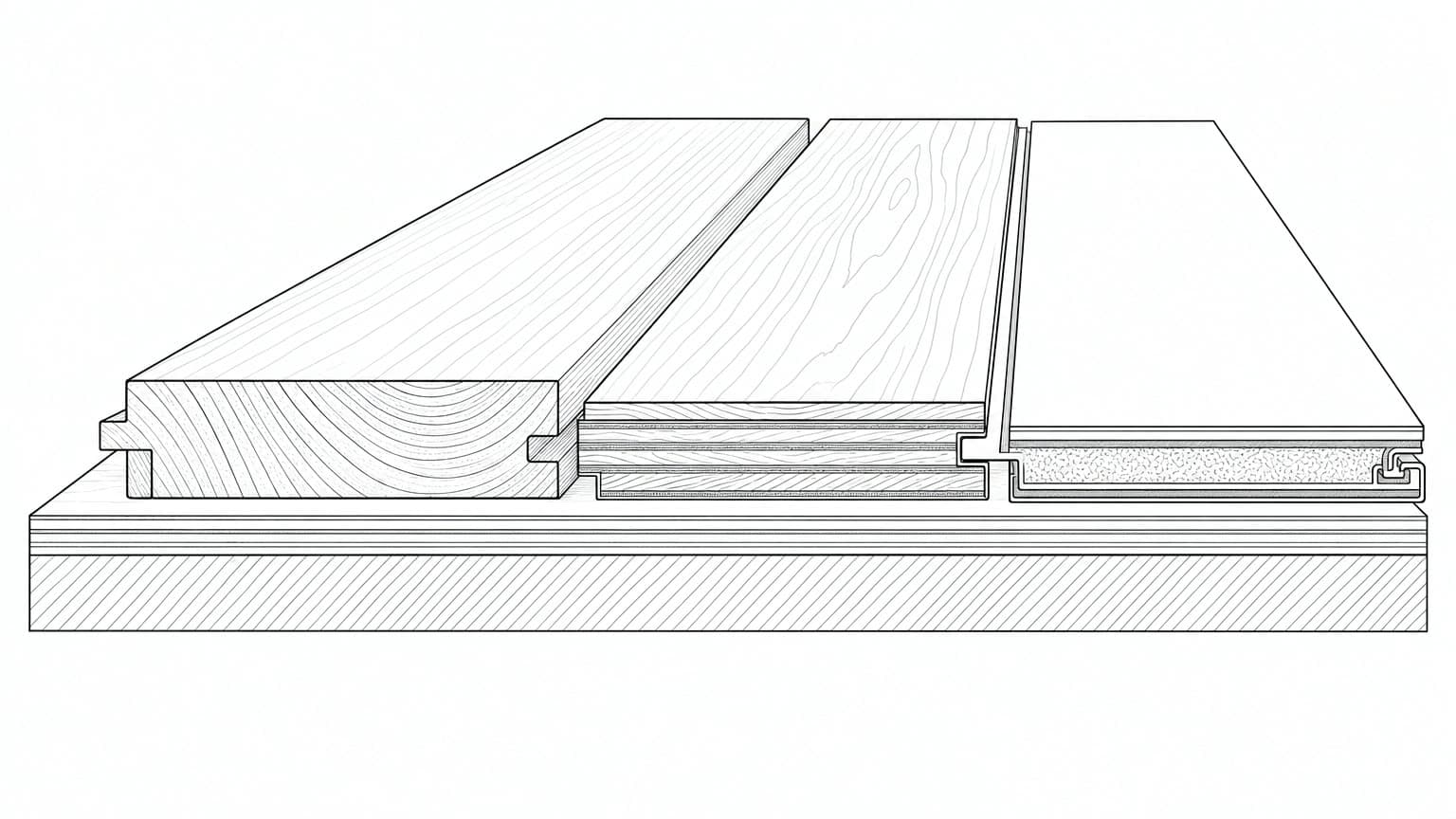
| Flooring | 12x24 porcelain on standard underlay | Heated floor under stone or large-format porcelain |
| Plumbing | Fixtures replaced in place | Moved drains, thermostatic valves, second sink |
| Ventilation | New fan on the existing duct | Properly sized fan, new insulated duct, roof vent |
Quick answers
Is a curbless shower worth it?
It looks better and it's easier to use as you get older, but it's less forgiving to build. The floor has to be recessed and the waterproofing has to cover a wider area. It's worth doing if you hire an installer who has built several.
Do I need to waterproof the whole bathroom?
Usually not. The shower or tub walls and the floor right around them are the wet areas. Waterproofing the whole room makes sense for a curbless shower or an open shower with no screen.
Can I tile over the existing tile?
Sometimes on a floor, rarely in a shower. Tiling over an old shower leaves whatever failed behind it in place and adds weight. If the old tile is coming off anyway, that's the time to do the waterproofing properly.
How long does a bathroom remodel take?
About two to four weeks on site for a standard remodel. Moving drains, custom glass or stone with long lead times add to that. Shower glass is measured after the tile is done and usually takes a couple of weeks to arrive.
Planning a bathroom? Model the new layout and see an itemized estimate before you book contractor walk-throughs.
Model your bathroom