Plumbing traps, vents and drain slope: what inspectors check
The trap under every sink holds a few inches of water that blocks sewer gas, and the vent keeps that water from being siphoned out. Most drain rules, and most failed plumbing inspections, involve one of those two parts.
ModelQuoter EditorialPublished Jun 10, 2026Reviewed September 2026
Applies to: US and Canada. The physics is the same everywhere. Slope and vent sizing tables are in the IPC and UPC in the US and the NPC in Canada, and cities amend both.
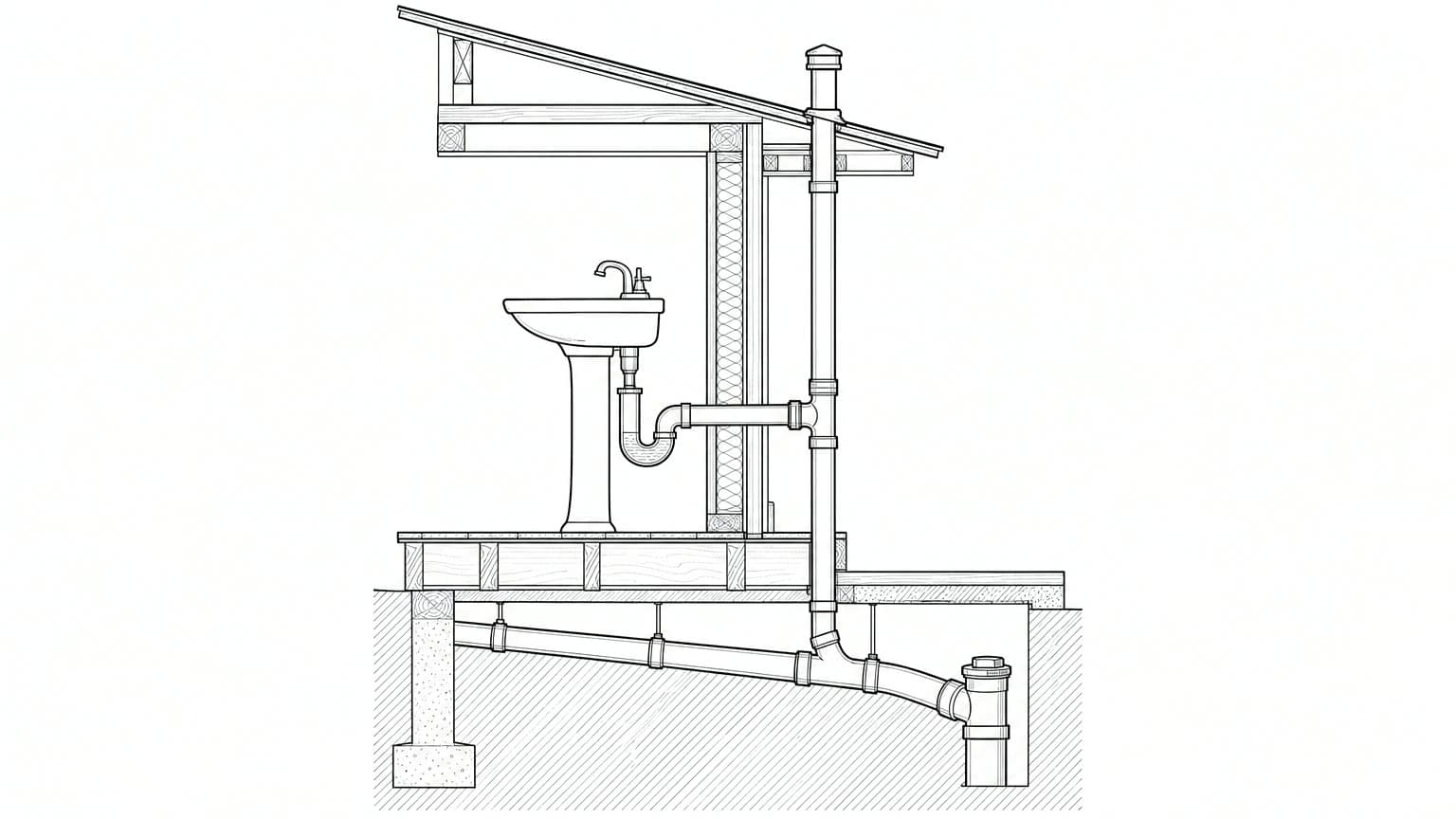
- The trap holds a few inches of water that blocks sewer gas.
- The trap arm. Code limits how long it can run before it reaches a vent.
- The vent lets air in, so draining water can’t siphon the trap dry.
- The drain falls at a steady slope under the floor.
- A cleanout, so a blockage can be reached without opening a wall.
How a trap and vent work together
Every drain has two jobs. It has to carry waste away, and it has to stop the sewer from coming back up. Gravity handles the first job. The trap handles the second. That's the U-shaped bend under each fixture, and the water that sits in it forms a seal. If the seal breaks, the room is open to the drain system, and that's a health problem as well as a smell.
When a sink empties, the water rushing down the pipe pulls air along behind it. A vent pipe lets that air come in from outside. Without a vent, the air comes from the easiest place it can find, which is the trap. The water gets sucked out of the trap, and the seal is gone.
Why S-traps fail inspection
On an S-trap, the drain drops straight down after the bend, which creates exactly that siphon. A P-trap runs sideways into a vented pipe, so the air comes from the vent instead of from the trap. That difference is why an S-trap fails inspection anywhere.
You can often tell a trap is being siphoned before anyone opens a wall:
- Gurgling from another fixture when one drains. Air is being pulled through a trap somewhere.
- A sewer smell that keeps coming back in one room, especially after a fixture hasn't been used for a while.
- Several fixtures draining slowly at once. That usually points to a vent problem more than a drain problem.
- Bubbles in the toilet bowl when the washing machine empties.
How much slope a drain needs
A horizontal drain has to slope enough to carry waste away, but not so much that the water runs off and leaves the solids behind. The common figure is a quarter inch per foot for smaller pipes, and bigger pipes are allowed to run flatter. Both codes publish the table, and your inspector will check against it.
| Slope | What happens |
|---|---|
| Too little | Solids settle and the line blocks, again and again |
| About right | Water and solids move together at about the same speed |
| Too much | The water races ahead and leaves the solids behind |
| A dip in the pipe | The low spot holds standing water and catches everything that passes |
A lot of people assume steeper is safer. It isn't, and it causes blockages that keep coming back. The right slope sits in a fairly narrow range.
What this means when you move a fixture
These rules seem abstract until you try to move something. Then they're the reason a two-foot move means opening the wall, and the reason a basement bathroom costs what it does.
- Moving a vanity along the same wall is usually straightforward, as long as the trap arm stays within its limit.
- Moving a sink to an island needs a loop vent or, where allowed, an accessible air admittance valve.
- Moving a toilet means moving the biggest drain in the room and the least forgiving one. Expect the floor to come up.
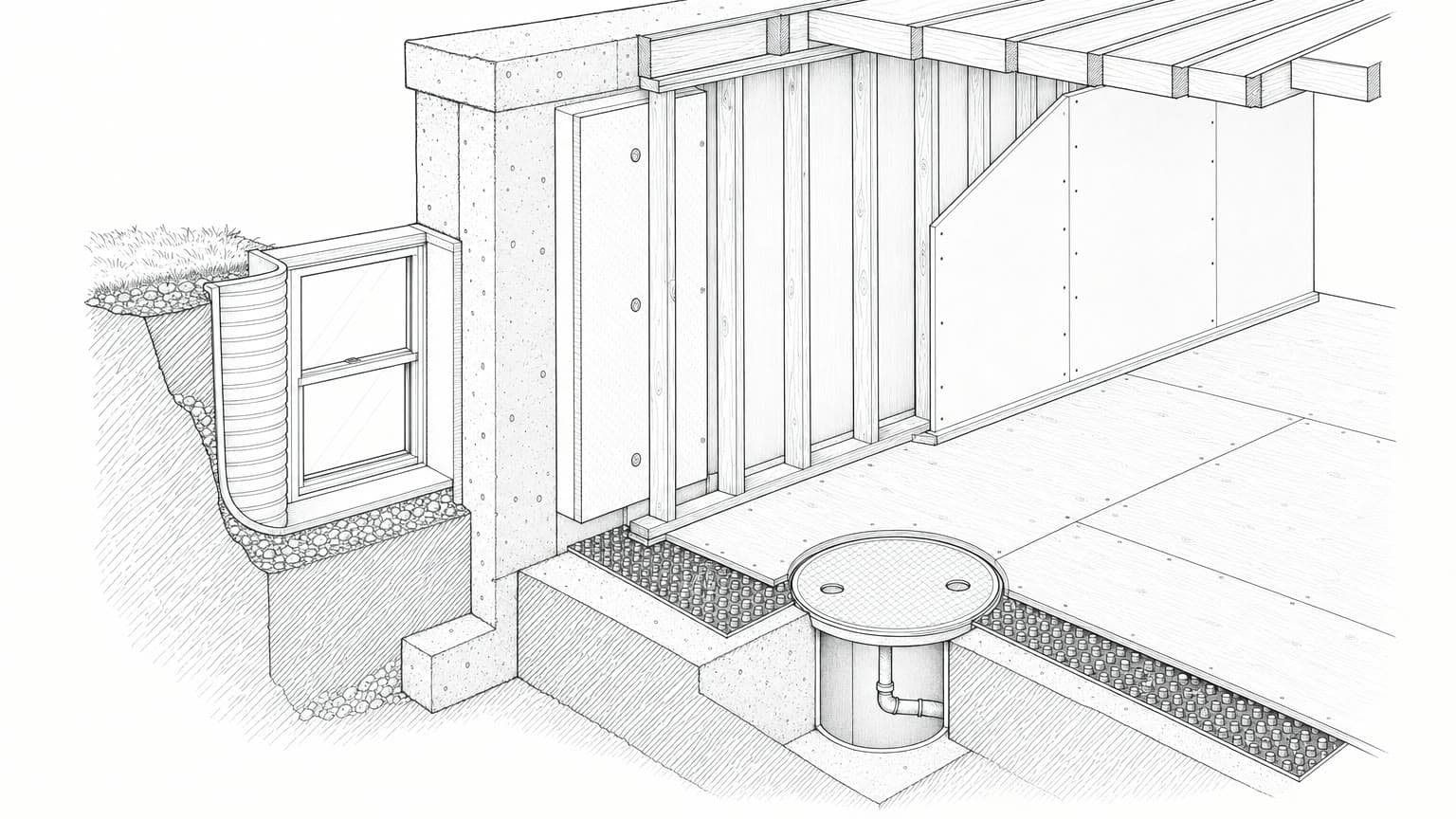
- Adding a bathroom below the sewer line means gravity can't do the work, so you need a sewage ejector pit or a macerating toilet. Both need power and their own venting.
- Adding fixtures to an existing drain branch can go past what the branch is sized for, and then the branch itself has to be made bigger.
Questions plumbers hear
My sink has an S-trap and works fine. Do I have to change it?
Existing plumbing is often allowed to stay until you change it. Once you touch that drain in a permitted renovation, it usually has to be brought up to code, and if you notice a smell now and then, it's probably already siphoning.
Is a bottle trap the same as an S-trap?
No. A bottle trap is a different design, common in Europe and on some vanities, and whether it's allowed depends on where you live. Check locally before you buy one, especially in North America.
Why does the smell come back after I've been away?
The water in the trap evaporates. A trap that isn't used for a few weeks can dry out and stop sealing. Run the tap for a few seconds. If the smell comes back after the trap is refilled, it's being siphoned rather than drying out.
Moving a sink, toilet or tub? Model the new bathroom or kitchen layout before the plumber starts the rough-in.
Model your bathroom