Asphalt vs. concrete vs. paver driveways
Asphalt is the cheapest to put in and concrete usually lasts longer; pavers cost more but are the easiest to repair. Most driveways that fail early fail from underneath, so pay for a proper base whichever surface you pick.
ModelQuoter EditorialPublished May 6, 2026Reviewed September 2026
Applies to: US and Canada. The base depths below assume a climate with freeze-thaw cycles. Milder regions can build lighter.
The short answer
- Base depth in freeze-thaw areas
- Usually 8–12" of compacted gravel
- How it's compacted
- In layers, not all at once
- Easiest to repair
- Interlocking pavers
- Cheapest to install
- Asphalt
What a typical project costs
Interlock driveway
640 sq ft, old asphalt out
$12,100–16,400
Installed, before tax, at 2026 Greater Toronto rates.
See it on my houseOpen the calculator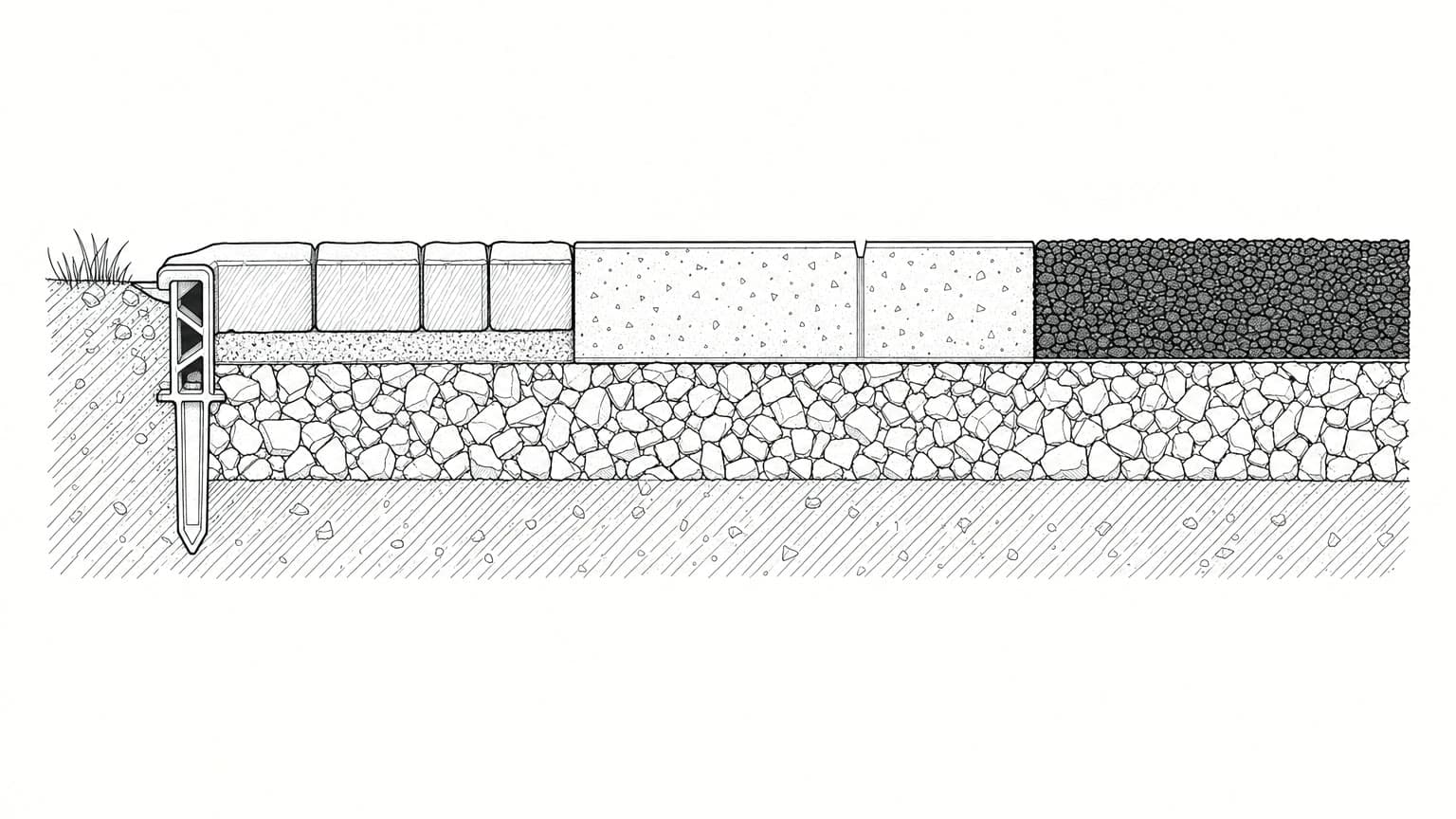
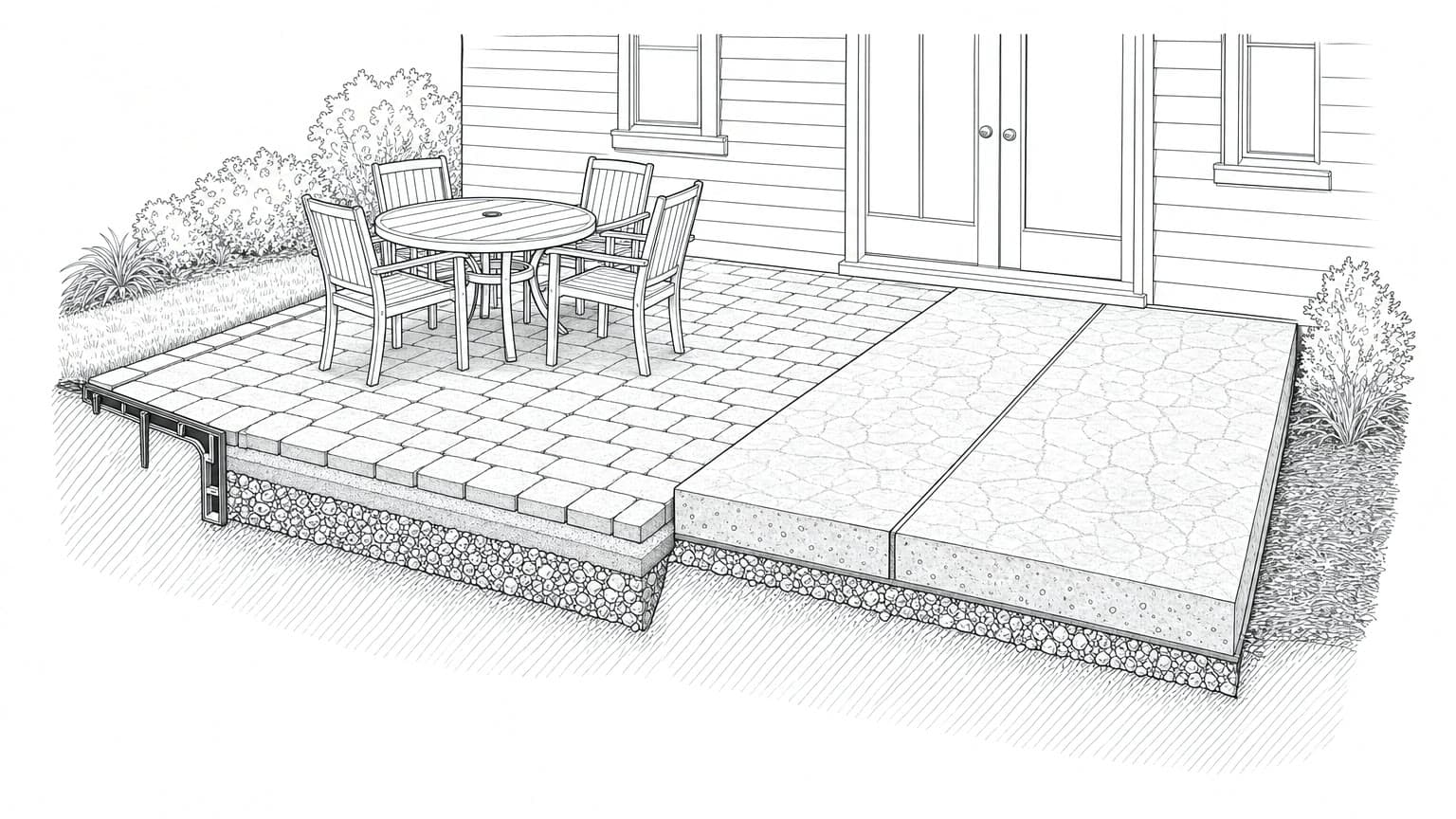
- Pavers on a thin, screeded sand bed. The easiest surface to repair.
- A concrete slab. The control joint gives it a straight place to crack.
- Asphalt, the cheapest to put in.
- The compacted gravel base under all three. Most driveways that fail early fail here.
- An edge restraint holds the pavers in place.
How the three compare
| Feature | Asphalt | Concrete | Interlocking pavers |
|---|---|---|---|
| Install cost | Lowest | Middle | Highest |
| Typical lifespan | 15–20 years | 25–30 years | 30+ years |
| Upkeep | Seal every few years | Seal the joints; clean now and then | Re-sand the joints; pull the odd weed |
| Repairs | Patches show | Patches show a lot | Lift and reset individual pavers |
| Frost movement | Flexible, handles some movement | Rigid; cracks if it moves | Each paver moves on its own |
| Road salt | Handles it | Can flake and scale | Handles it if properly cured |
| When you can drive on it | 1–3 days | At least 7 days | Right away |
People tend to underrate the repairs row. Sooner or later every driveway needs a section dug up, whether for a service line, a low spot or a tree root. Pavers come up and go back down without a trace. Patches in asphalt and concrete stay visible for good.
Why the base matters most
A driveway carries the weight of cars over soil that swells, shrinks and heaves with water and frost. The gravel base spreads out that weight and gives water somewhere to go. If the base is too thin or poorly compacted, the surface won't save it. Asphalt cracks, concrete heaves and pavers sink into ruts.
The base is also the easiest place for a contractor to cut corners, because you can't see it the day the job is done or for a couple of years after. That's why the base depth and how it's compacted belong in the written contract, not left to the crew.
Signs of a good job
- It drains away from the house. A driveway that slopes toward the garage or foundation is a design mistake, however nice the finish is. Check the slope before work starts.
- Pavers have edge restraints. Without them, the outer rows spread and the whole field comes apart from the edges in.
- Concrete has control joints. Concrete will crack, and the joints decide where. They have to be cut to the right depth, soon after the pour.
- Asphalt is rolled while it's hot. Compaction has to happen before it cools. A crew that lets it cool leaves a surface that breaks up early.
- Concrete gets time to cure. It needs about a week before cars go on it. Driving on it early causes damage you won't see for a year.
- The ends are finished properly at the garage and the street, so water doesn't pool at either end.
Where the water goes
A driveway is a big surface that doesn't absorb water, and it usually slopes toward the house. Somebody has to decide where that water goes. If nobody does, it usually ends up at the foundation.
- Slope it away from the garage and house along its whole length, including the stretch by the door.
- Put a trench drain at the garage if the driveway slopes down toward it, and make sure the drain empties somewhere other than the foundation drain.
- Don't raise the surface above the damp-proofing on the wall. Repaving on top of an old driveway raises the level, and a few inches can be enough to let water past the barrier that keeps the wall dry.
- Keep the digging clear of the weeping tile. Excavating along the foundation can damage or block it.
- Check the end at the street. Water that pools at the apron freezes, and in many places the city owns that part of the driveway.
- Think about where the snow will go, and whether the meltwater from the pile will run back toward the house.
Watch out for trees, too. Digging a base inside the root zone of a mature tree can slowly kill it, and roots that survive will lift whatever you put over them. If a big tree is near the driveway, talk to an arborist before the excavator shows up. In many cities mature trees are protected by bylaw no matter whose property they're on.
Permits, parking and sealing
Do I need a permit for a driveway?
Often, especially where it meets the street, since the city controls the curb cut and apron. Widening a driveway usually brings in lot-coverage and stormwater rules as well. Check before you order materials.
How soon can I park on it?
Pavers right away. Asphalt in a couple of days, though it stays soft on hot days through the first summer. Concrete needs about a week before cars and keeps getting stronger for a month.
Is sealing worth it?
On asphalt, every few years, because it slows down drying and crumbling. On concrete it helps protect against salt damage. Neither fixes structural cracks, and sealing asphalt too often causes problems of its own.
Should I consider permeable pavers?
They're worth a look, and some cities now require or reward them for managing stormwater. They let rain soak into the ground on your property, but they need a deeper base of open gravel and occasional vacuuming to keep the joints from clogging.
Price asphalt, concrete or pavers for your driveway in our free calculator.
Open driveway calculator