Can a subcontractor put a lien on your house?
Yes. If your general contractor doesn't pay the drywaller, the drywaller can register a claim against your home, and having paid the contractor in full isn't always enough to stop it. Holding back part of each payment and keeping the right paperwork protects you.
ModelQuoter EditorialPublished Apr 1, 2026Reviewed September 2026
Applies to: US and Canada. The idea is the same everywhere, but deadlines and holdback percentages are set by each state and province. Treat the figures here as illustrations of how the rules work, and check the rules where you live.
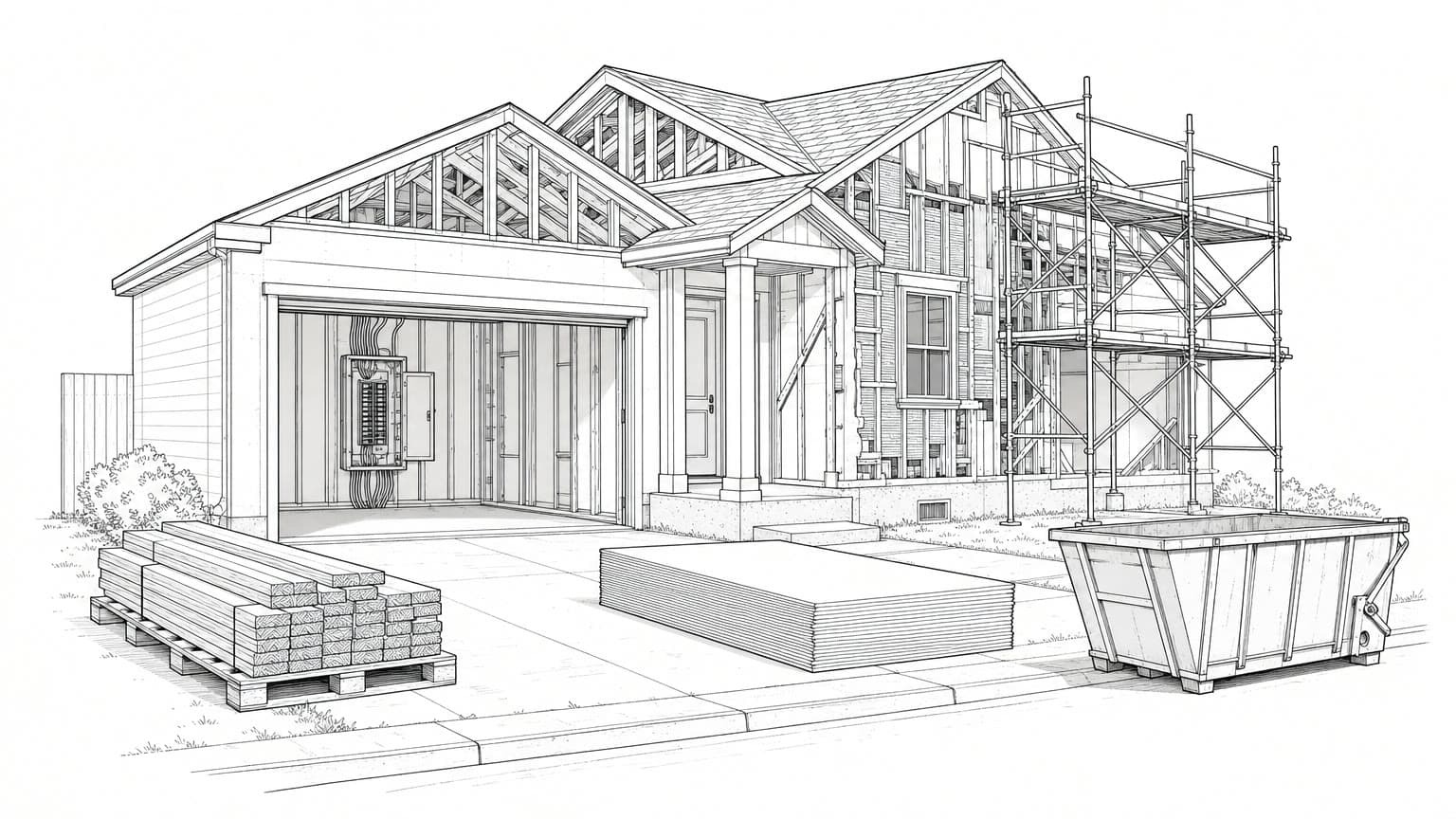
- The lumber yard that supplied the materials.
- The drywall crew.
- The crew on the scaffolding.
- The electrician.
- Even the waste bin rental. Anyone here who goes unpaid can register a lien against the house.
Can someone you never hired put a lien on your house?
Generally, yes. Anyone who supplies labour or materials to improve your property can usually register a claim against the property itself, whether or not they have a contract with you. The subcontractor's security is your house, because your house is what their work improved.
A registered lien puts a cloud on your title. You'll usually find out when you refinance or sell, because it has to be cleared before the deal can close. That pressure is exactly what the system is designed to create.
How does the holdback protect you?
In Ontario, the Construction Act requires the owner to keep back a basic holdback of 10% of the value of the work as it's paid for. It's a legal obligation, not a bargaining point, and paying it out early is the most common way homeowners lose the protection the Act gives them.
You can release the holdback once the lien period has passed without anyone registering a claim. In Ontario that's generally 60 days from whichever comes first: publication of the certificate of substantial performance, or the completion, abandonment or termination of the contract. Someone who has registered a lien then has another 90 days to start a court action to enforce it.
How does it work in the US?
The practical effect is the same as a holdback system. The notices you get early in the job are a list of everyone who could put a lien on your house later.
How do you protect yourself?
- 1.
Keep every notice you receive
Each one names someone who could later file a claim. Together, they're the list of people you need to confirm have been paid before you release the final payment.
- 2.
Get the list of subcontractors at signing
Ask for it in writing when you sign the contract, and ask to be told when anyone is added.
- 3.
Collect lien waivers with each payment
Ask for a signed waiver or release from each subcontractor and supplier covering the work you're paying for, in exchange for the payment. It's standard on commercial jobs and completely reasonable to ask for on a house.
- 4.
Keep the holdback for the full period
Don't release it early because the work looks finished and everyone gets along. The waiting period exists for the times when things go wrong.
- 5.
If a lien is registered, get legal advice fast
The deadlines are short and strict. There are usually ways to have a lien removed, such as paying money into court, posting a bond or negotiating, but they all run on a clock.
What happens if a lien is registered?
A lien shows up on a title search, and title searches happen at the moments when you have the least room to argue.
- When you sell. The buyer's lawyer will require the lien to be removed before closing. That usually means paying the claim, or putting enough money in trust to cover it, before the closing date.
- When you refinance. A lender won't rank behind a construction lien, so the claim has to be settled before the new mortgage is paid out.
- On a home equity line. An existing line of credit can be frozen while the claim is on your title.
- With insurance. A lien doesn't affect your insurance directly. Combined with unpermitted work, though, it can turn a routine claim into an investigation.
What are prompt payment rules?
A growing number of places, including Ontario and several US states, now have prompt payment laws alongside their lien laws. These set deadlines for paying each party down the chain once a proper invoice is delivered, and give an unpaid party a faster route through adjudication instead of the courts. Most of the rules apply to commercial projects, but on a larger home renovation the deadlines can apply to you, so ask whether your contract is covered before you sign.
Two more questions
Does a lien mean I could lose my home?
Almost never. A lien clouds your title and puts pressure on you to resolve it, and the great majority are cleared by payment or negotiation. A forced sale is a remote last resort.
Do lien rights apply to small jobs?
Generally, yes. There's rarely a minimum amount. A supplier owed a few thousand dollars for materials has the same basic rights as one owed six figures.
Start with a clear scope. Model your project to get an itemized scope and an instant estimate before you sign a contract.
Model your project