Warning signs of a renovation scam
Most renovation scams follow the same pattern: a knock at the door, pressure to decide today, a demand for cash, and a price that only makes sense if the work never gets finished. Most scammers move on if you ask for a written quote and a day to check their references.
ModelQuoter EditorialPublished Jul 8, 2026Reviewed September 2026
Applies to: US and Canada. Licensing bodies differ, but the checks below work in both.
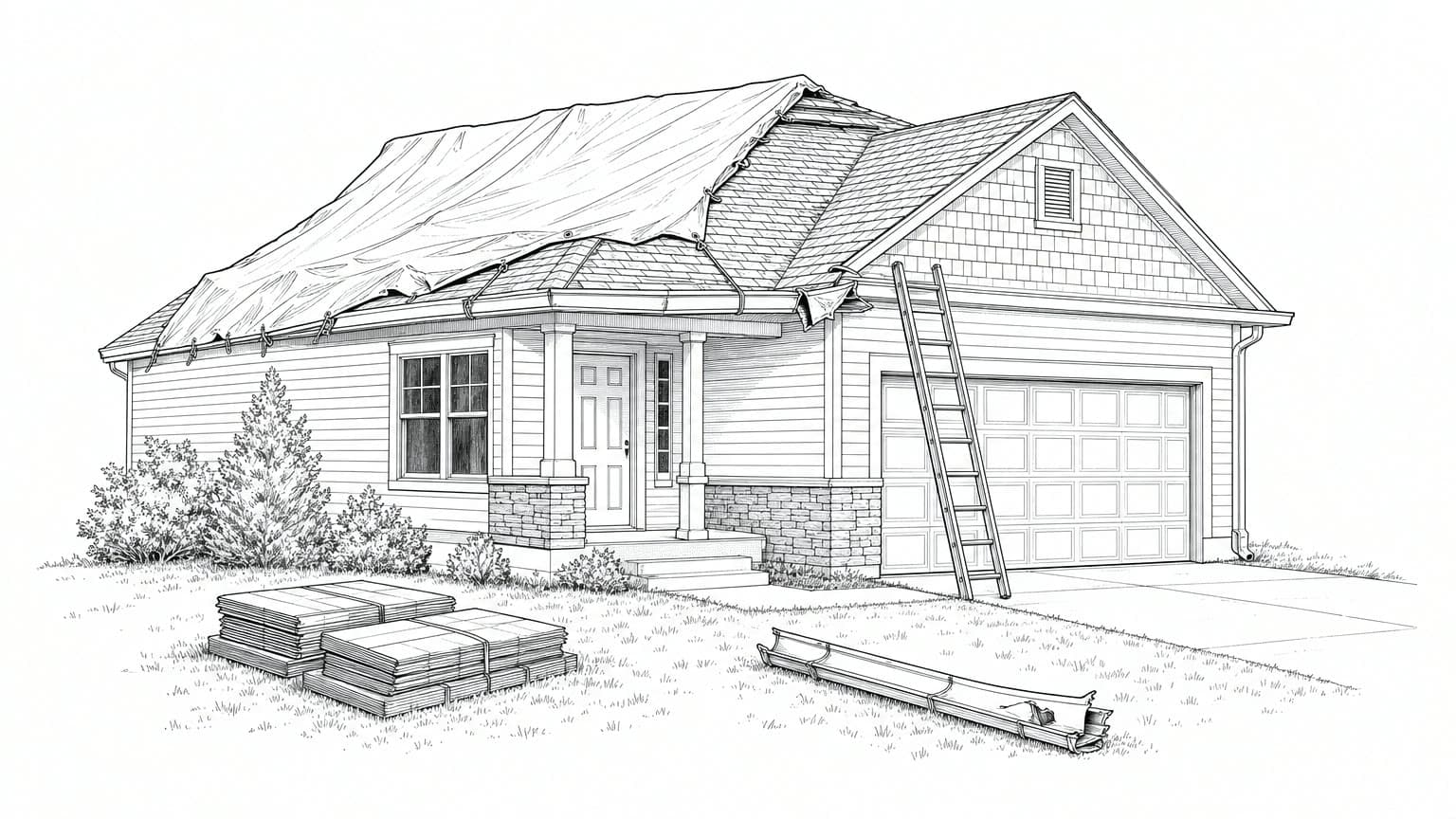
- A tarp where a finished roof should be.
- Materials left on the lawn, often just enough to make the job look started.
- A ladder still up, long after anyone worked here.
- A gutter torn off and left behind.
Red flags
Very few of these operators are clever. They count on you deciding fast, while you're worried, without writing anything down.
- They showed up uninvited. Knocking on doors after a storm is the classic pattern, especially for roofing, driveways and tree work. Good contractors in those trades are usually booked solid after bad weather, not going door to door.
- The rush comes from them. "The crew is in the area today." "This price is only good until tonight." Real scheduling limits exist, but a deadline that only applies to signing is a sales tactic.
- They want a lot of cash up front. Cash leaves you with no proof of payment. Combined with a deposit well above the normal 10–20%, it's the strongest warning sign there is.
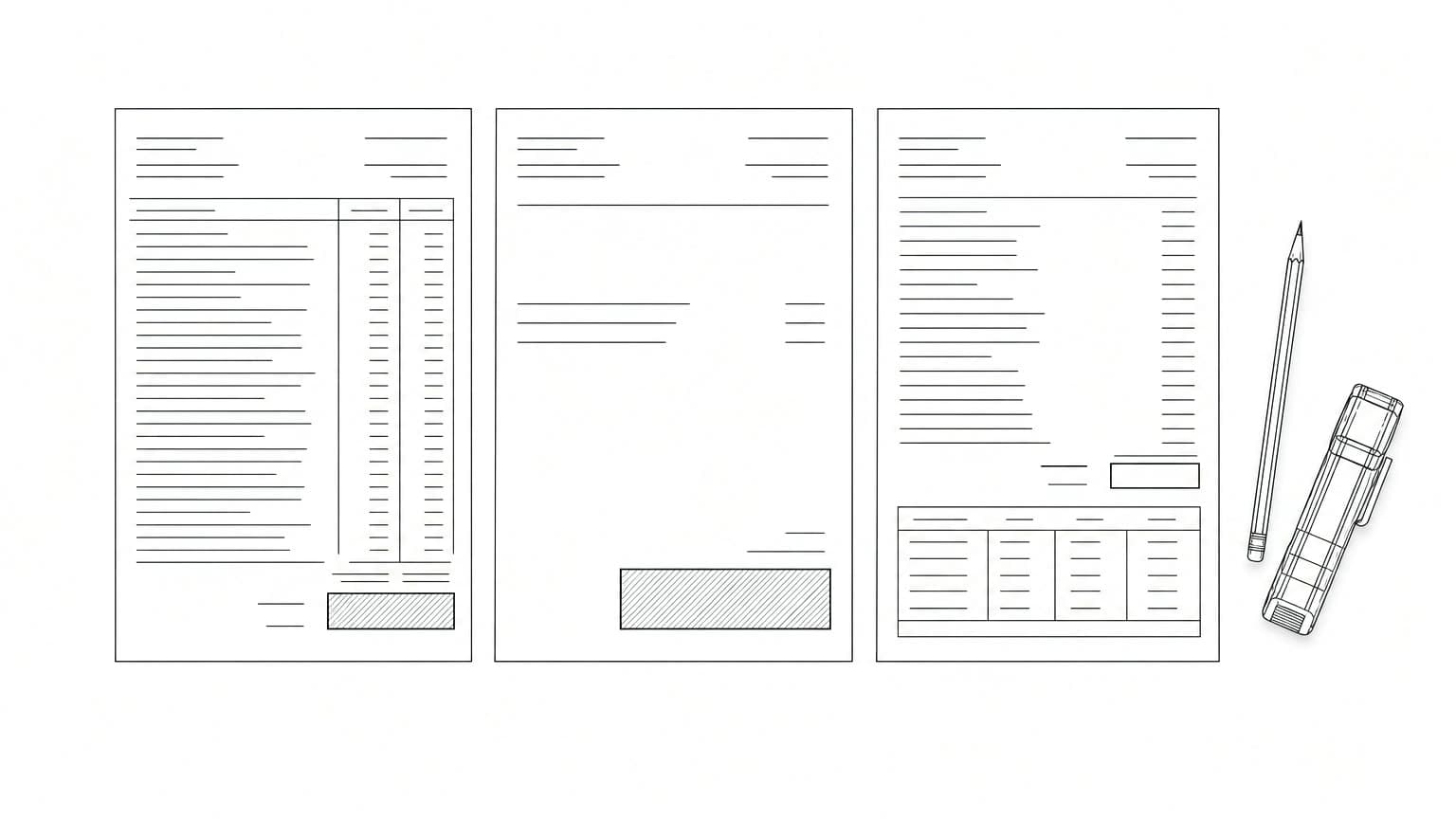
- There's no written contract, or it doesn't describe the work. A page with a total and no description of the work is a receipt for a promise.
- They have leftover material from another job. "We've got asphalt left over from a job down the road" is an old opener, and the material is usually neither the grade nor the amount they claim.
- You can't find them. A cell number, a magnetic sign on the van, no address, no licence number, and no company you can look up.
- They want to skip the permit. They'll say it saves you money. What it really does is skip the inspection that would have caught the bad work.
The escalating-repair script
One pattern is worth knowing on its own. It starts with a cheap inspection or a small repair. Then the contractor "finds" something alarming that only they can see, in the attic, under the shingles, or inside the chimney. Each new discovery is more urgent and more expensive than the last.
If someone reports a serious problem you can't see for yourself, stop. Get an independent opinion before you approve anything else.
A legitimate contractor versus a rogue one
Storms do create real, urgent work, and reputable contractors do travel for it, so refusing to hire anyone after bad weather isn't practical. Watch how they sell instead.
| What to watch | Rogue operator | Legitimate contractor |
|---|---|---|
| First contact | Knocks on your door | You called them, or a neighbour referred you |
| Inspection | Goes up on the roof alone and reports damage you can't see | Takes photos and shows you |
| Insurance | Offers to "handle the claim" and cover your deductible | Documents the damage; you deal with your insurer |
| Payment | Big cash deposit before any work | A normal deposit by cheque or card, with a receipt |
| Paperwork | A total on a page | An itemized scope, licence number and insurance details |
| Start date | Tomorrow | Has a waiting list, because everyone does after a storm |
Check out a contractor in fifteen minutes
- 1.
Look up the licence with the body that issues it
Check the official register. A number printed on a business card proves nothing by itself. US state contractor boards and Canadian provincial and municipal bodies publish licence status online, including any discipline.
- 2.
Call the insurance broker yourself
Ask the contractor for their broker's name and phone number, then call and confirm the policy is active, how much it covers, and that it covers this kind of work. A PDF certificate the contractor emails you proves nothing.
- 3.
Confirm workers' compensation coverage
If an uninsured worker gets hurt on your property, you could end up responsible. State and provincial boards will confirm an employer's standing directly.
- 4.
Find a real business address
An actual address, not a mailbox. Search the company name with words like "complaint" and "lien" as well as "reviews."
- 5.
Call two recent local references
Ask what went wrong on the job and how it was handled. Every job has something, and the answer tells you more than a list of compliments.
If it's already gone wrong
- Stop paying right away. More payments almost never fix it.
- Photograph everything, including work that was never done, and keep every message.
- Report it to the licensing body and to consumer protection. Even if you don't get your money back, your complaint builds the record that stops the next victim.
- Call your insurer. Some policies cover contractor fraud or damage from defective work.
- Look for a recovery fund. Some places compensate people who lose money to a licensed contractor, up to a limit.
Common questions
Is every contractor who knocks on my door a scammer?
No. Some small companies really do go door to door, especially in landscaping and painting. Treat it as a reason to check them carefully. The combination of a knock, pressure and a demand for cash is what should end the conversation.
They're licensed. Does that make them safe?
It makes them accountable, which is different. A licence means there's a body that can act on a complaint and something they can lose. Check their discipline history as well as whether the licence is active.
How much should I pay up front?
10–20%, or the documented cost of special-order materials. Some US states cap it by law: California and Nevada limit it to $1,000 or 10%, whichever is less. Anything close to half the price before work starts isn't normal.
The work is done and it's defective. What now?
Get an independent inspection and a written report before you confront anyone. You'll need a neutral description of what's wrong from someone with no stake in the outcome.
Start with a written scope and a fair estimate, so a price that's far too good or far too urgent stands out.
Model your project